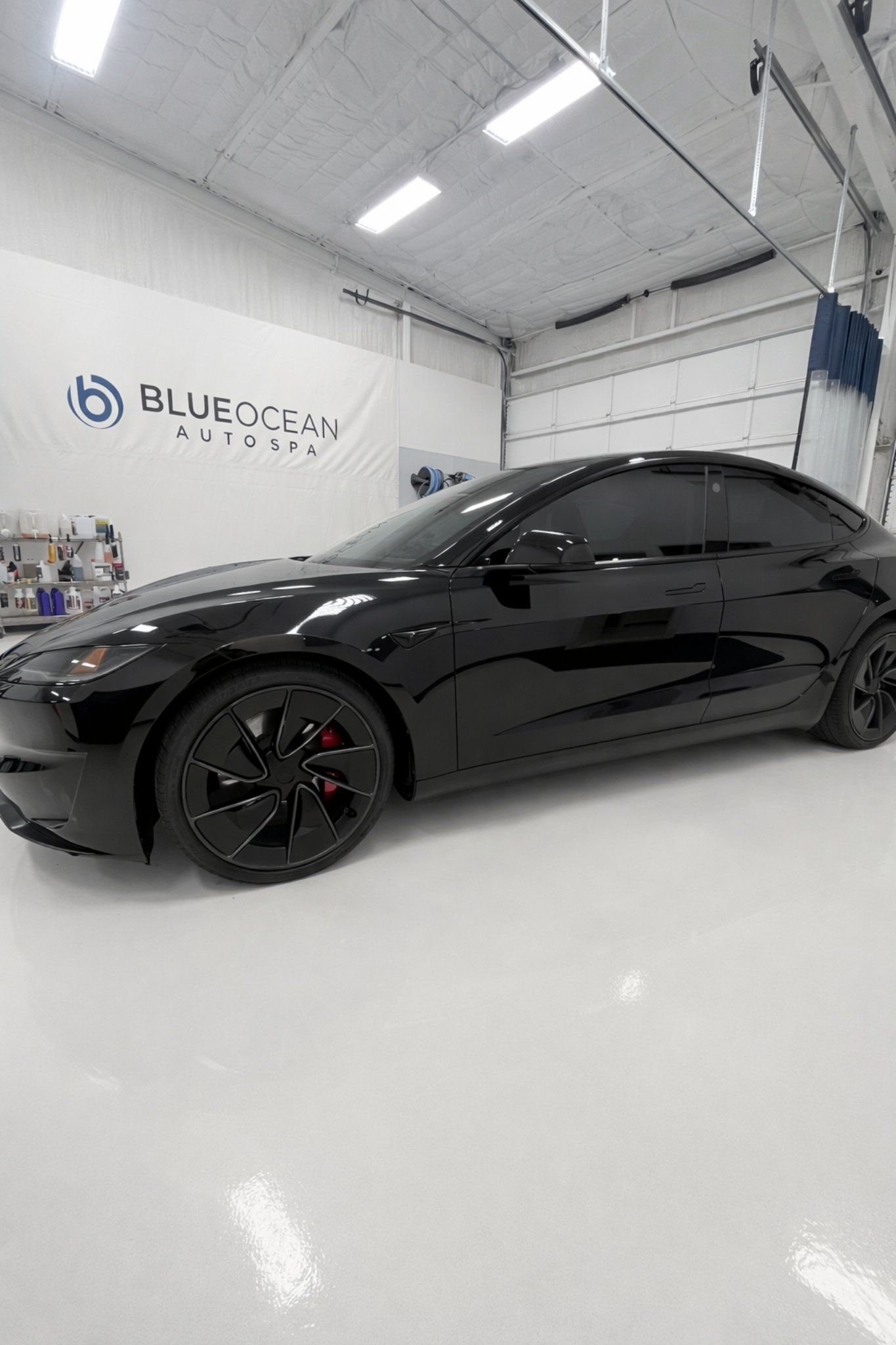
2026 Tesla Model 3 Protected with XPEL Paint Protection Film, Ceramic Window Tint, and 4-Year Ceramic Coating
There is a certain precision to the way a Tesla Model 3 presents itself in black.
The surfaces are uninterrupted, almost architectural, with reflections that travel cleanly from panel to panel. In this case, the finish arrived already striking, but also vulnerable in the way all dark, high-gloss paint tends to be.
Under bright lighting, every contour becomes more defined, and with that clarity comes exposure to the realities of daily driving.
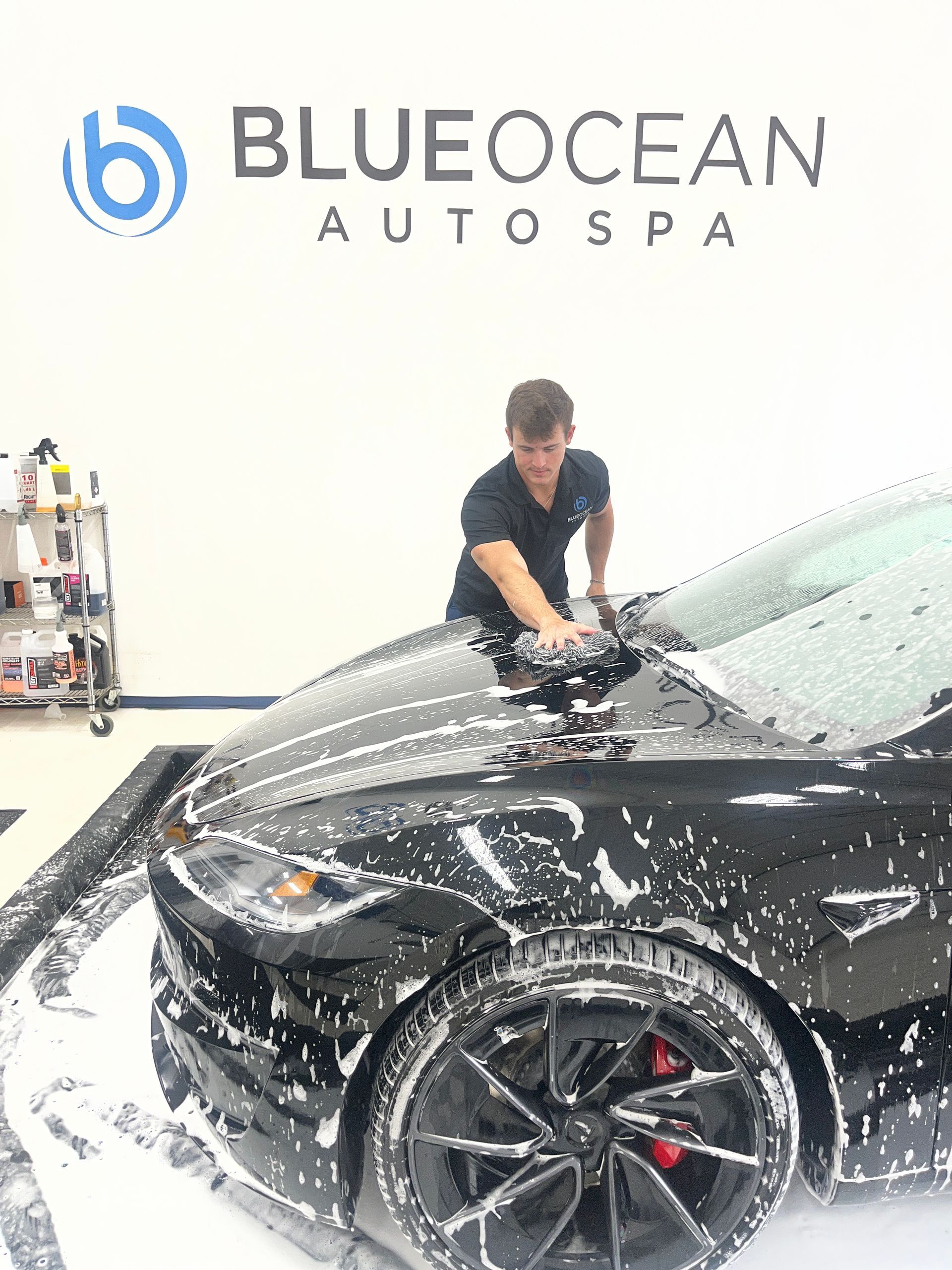
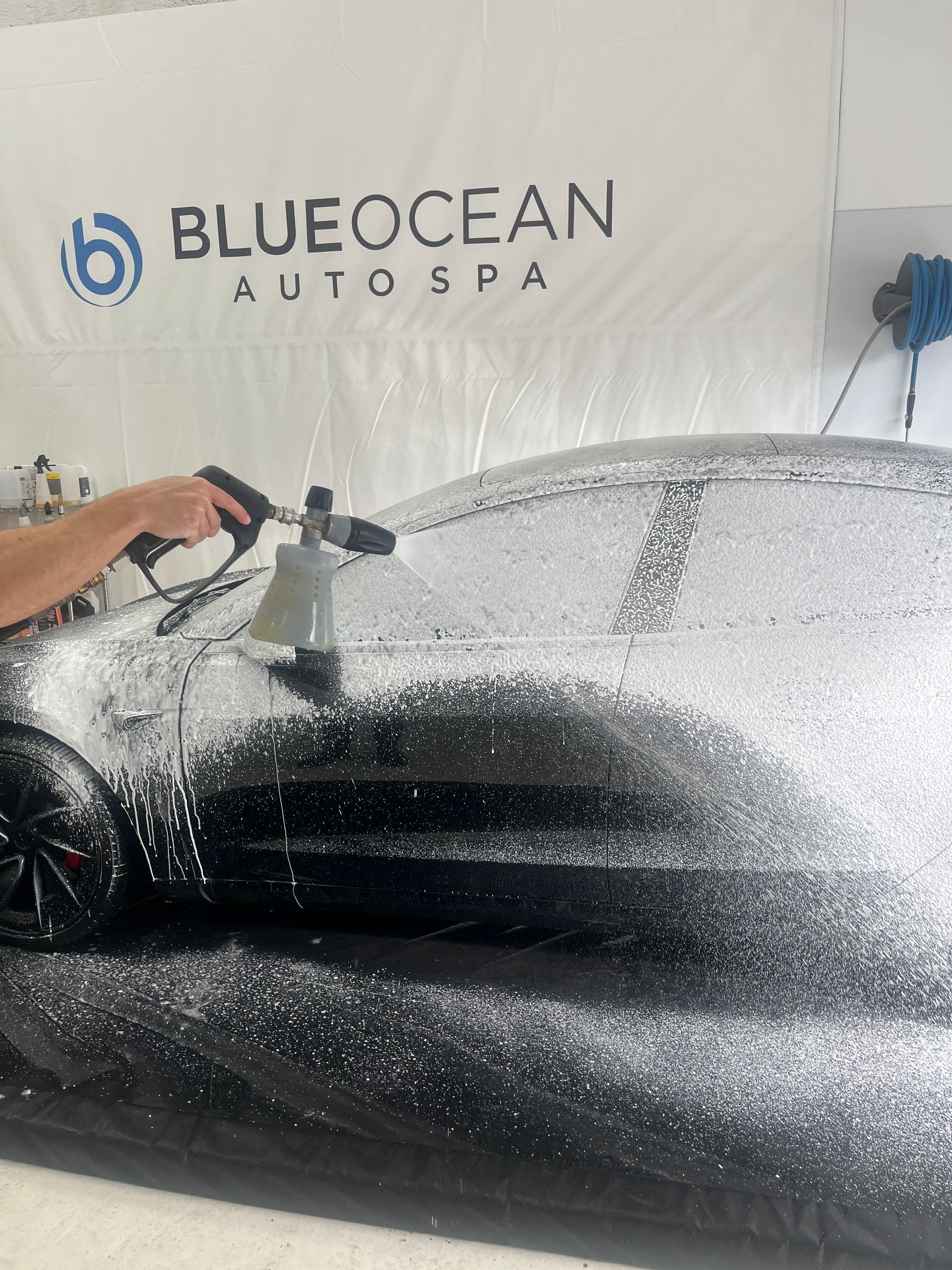
Paint Decon Treatment
Before anything permanent was introduced, the car was carefully washed and decontaminated. Foam clung to the panels, lifting away what the eye could not yet see. Around the front end, the surfaces were treated with particular attention. This is where the car meets the road first, and where protection matters most.
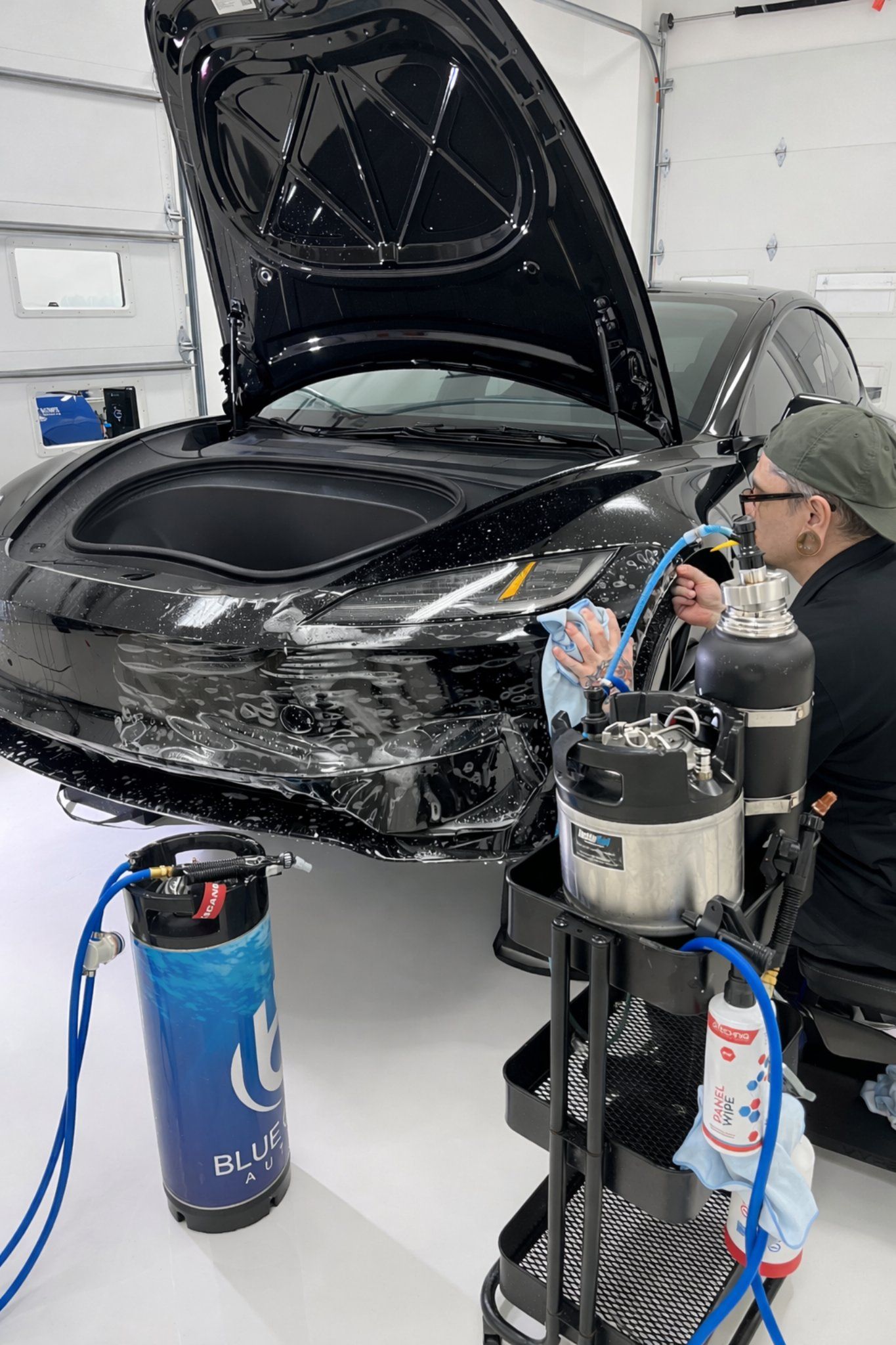
Paint Protection Film
The front bumper was wrapped in XPEL paint protection film, a clear, durable layer designed to absorb the kind of impact that would otherwise mark the paint beneath. On a vehicle like this, with its low and forward-facing profile, the bumper takes the brunt of road debris, fine gravel, and highway wear. The film becomes a sacrificial surface, preserving the original finish without altering its appearance. Once installed, it disappears into the paint, leaving only the uninterrupted gloss behind.
Watching the film settle into place across the curves of the bumper reveals the nuance of the material. It conforms tightly, following each edge and transition, allowing the design of the car to remain intact. Over time, this layer helps maintain not just the look of the vehicle, but also its long-term value. Chips and pitting that would normally accumulate are instead deflected, leaving the underlying paint untouched.
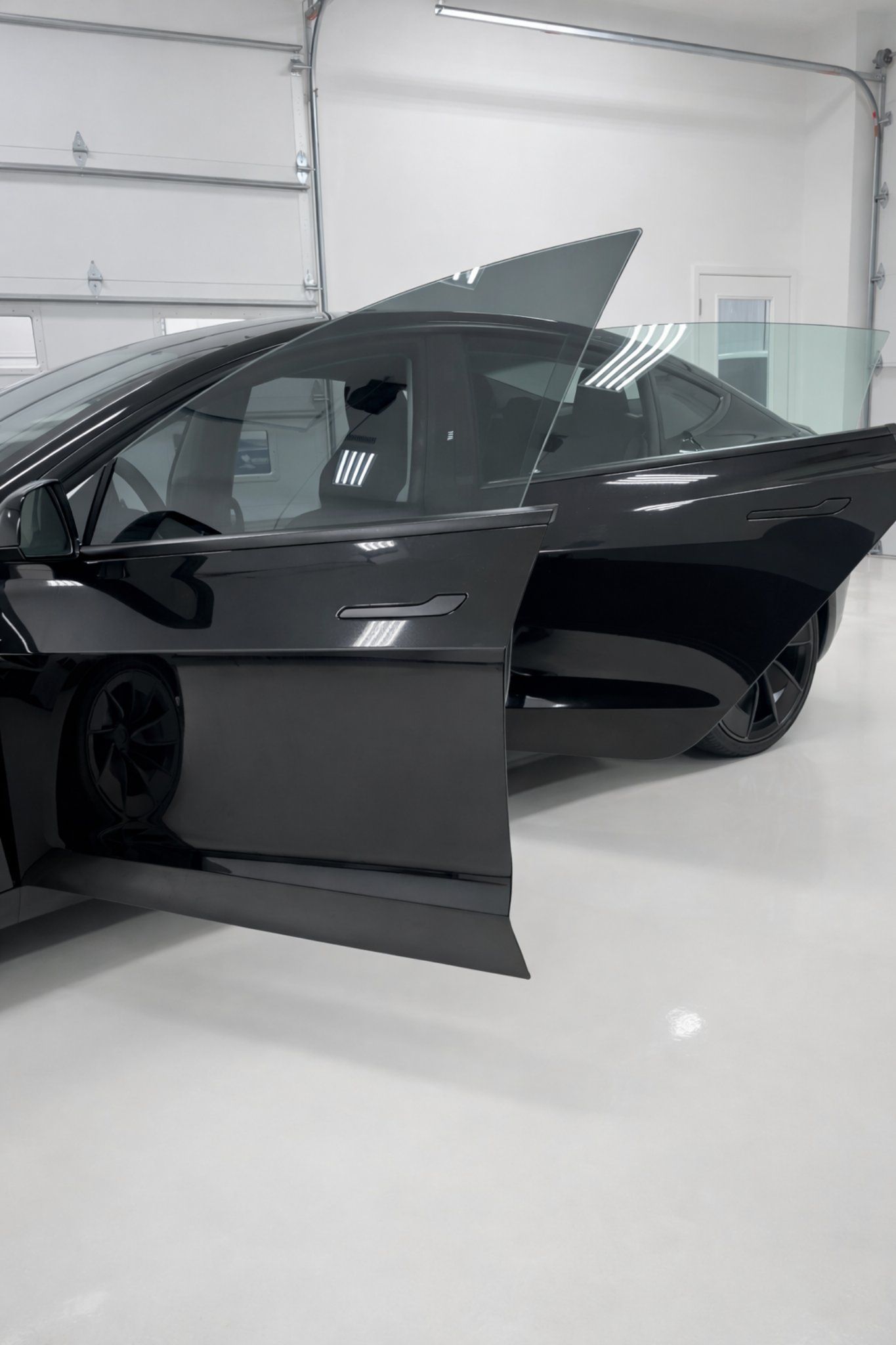
Ceramic Window Tint
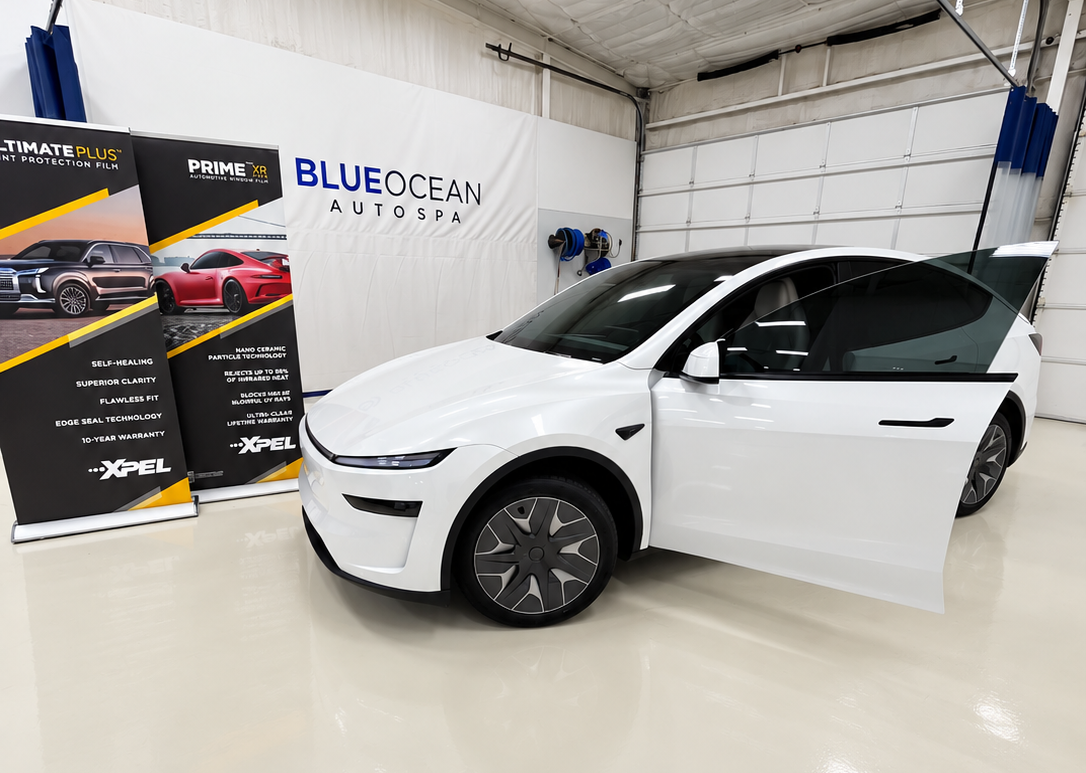
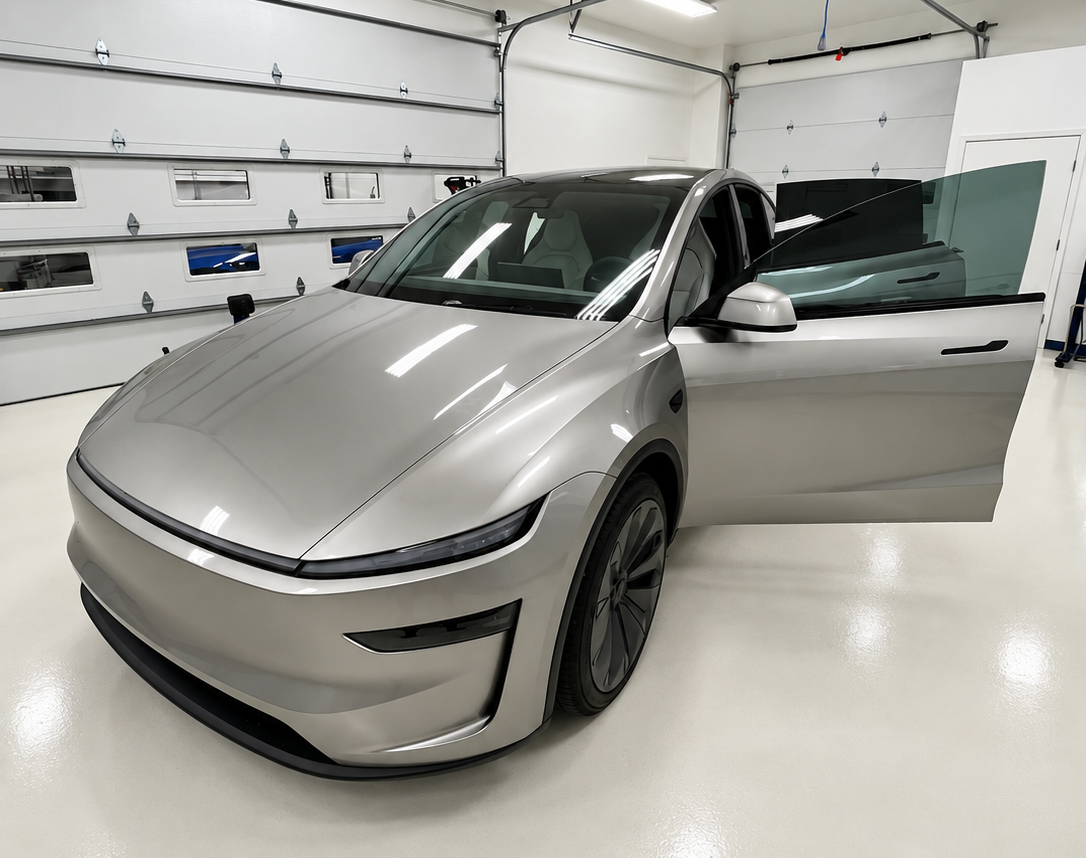
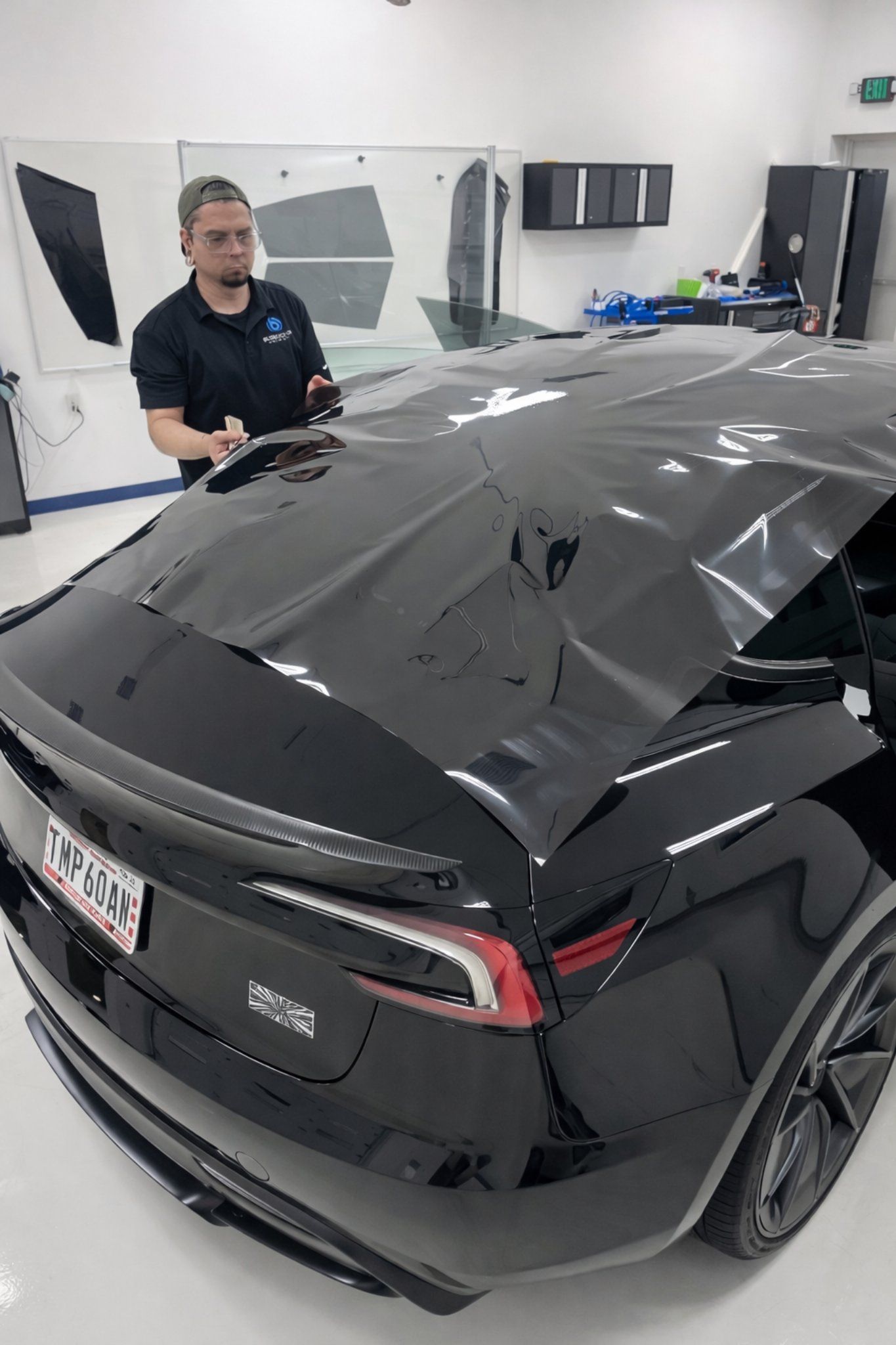
Glass was treated next, and here the transformation is more subtle to the eye but immediately noticeable in use. XPEL XR PLUS ceramic window tint was applied across all side windows and the rear glass. From the outside, the finish becomes deeper and more cohesive, complementing the black paint with a uniform tone. Inside, however, the experience shifts entirely.
This high-performance tint is engineered to reject heat, not just darken the glass. On bright days, it reduces the intensity of solar energy entering the cabin, helping maintain a more stable interior temperature. That translates to less reliance on climate control and a more comfortable drive, especially during extended time on the road. It also filters out a significant portion of harmful UV rays, which protects interior materials from fading and aging over time.
There is also a sense of calm that comes with properly tinted glass. Glare is softened, harsh light is diffused, and the cabin feels more composed. For a vehicle defined by quiet electric performance, that added refinement feels appropriate.
Ceramic Coating
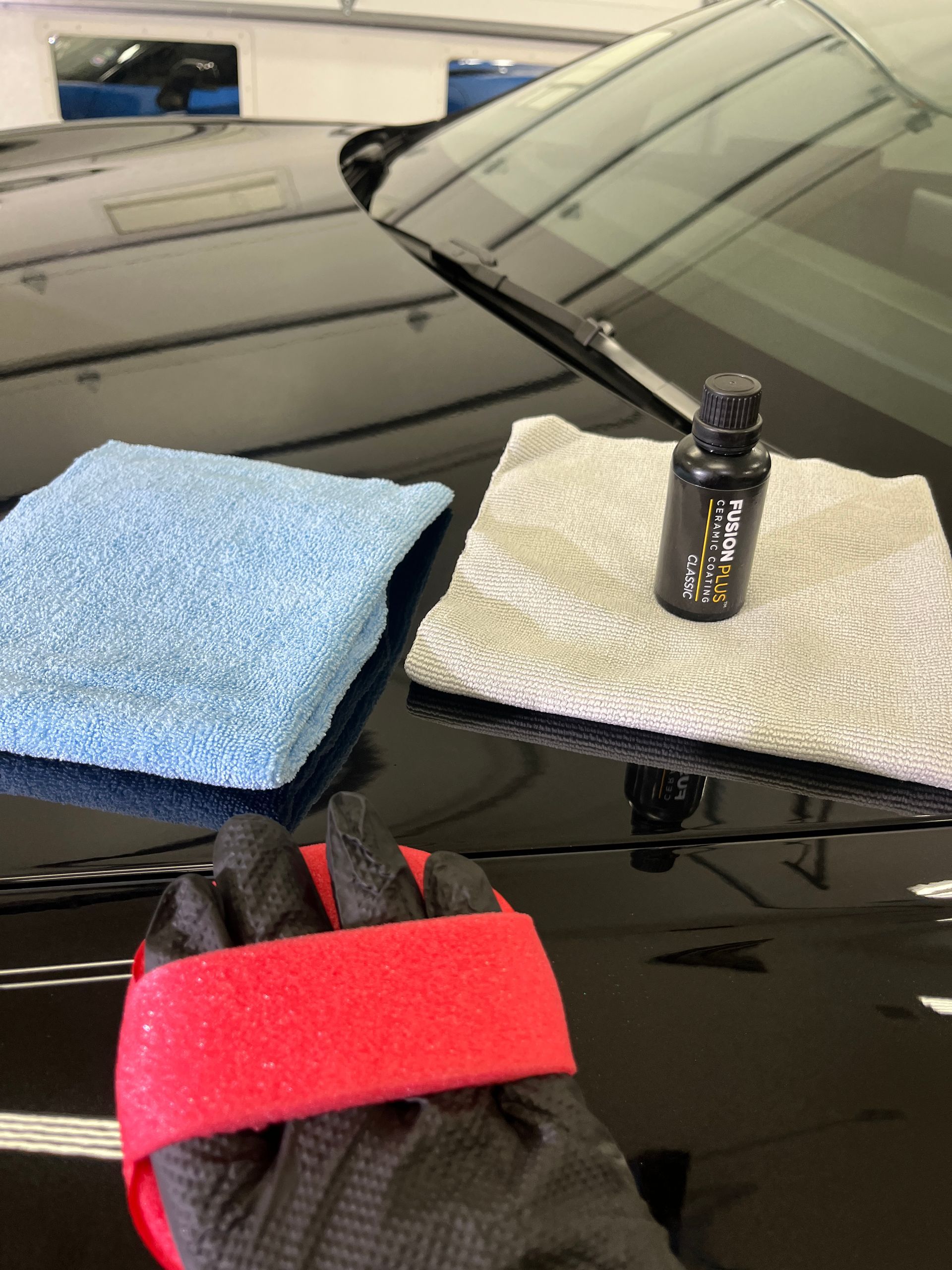
With protection in place on the most exposed areas and the cabin insulated from the outside environment, attention turned to the paint as a whole. The application of XPEL Fusion Plus Classic ceramic coating introduced a different kind of defense. Where the film guards against physical damage, the coating enhances the surface itself.
Applied carefully across the paint, the coating bonds at a molecular level, creating a slick, hydrophobic layer. The effect is immediate. Reflections sharpen, depth increases, and the black finish takes on a more liquid appearance. Under lighting, the panels no longer just reflect, they almost glow with a richer clarity.
Beyond aesthetics, the coating simplifies ownership in ways that become more apparent over time. Water beads tightly and rolls away, carrying dirt and contaminants with it. This reduces the effort required to maintain the vehicle and helps keep it cleaner between washes. Environmental fallout, road grime, and light staining are less likely to adhere, and when they do, they release more easily.
For a daily-driven vehicle, especially one with such a revealing color, this kind of surface behavior makes a meaningful difference. It allows the car to maintain its presence without constant intervention.
The Results
What stands out most at the end of the process is how little appears to have changed at first glance. The lines remain the same, the silhouette untouched. Yet the experience of the car has been quietly elevated. The front end is shielded from the realities of the road, the cabin is insulated from heat and light, and the paint carries a finish that is both deeper and more resilient.
The black Tesla now sits with a kind of composure that goes beyond its original form. It is prepared, in a way that is not immediately obvious, for the miles ahead.