2026 Tesla Model Y Ceramic Window Tint with 70% Windshield Tint for Heat Rejection
There is a particular kind of confidence that comes with returning for the same service on a new vehicle. With this 2026 Tesla Model Y, the owner already knew what properly selected ceramic window tint could do. This was their second Tesla, and after experiencing the difference heat-rejecting tint made on the first one, tinting the new Model Y was less of an experiment and more of a priority.
Of particular importance was the windshield.
The owner had previously experienced a 70% VLT ceramic window tint on the front windshield and remembered how much of a difference it made. A 70% film remains very light in appearance, but its purpose here was not to dramatically darken the glass. The goal was heat rejection and a more comfortable cabin while preserving a clear, natural view through the windshield.
A Familiar Solution for a New Model Y
Tesla cabins present an interesting challenge when it comes to managing sunlight. The Model Y's expansive glass contributes to its open, airy interior, but all that glass also means there is a substantial surface area exposed to solar energy.
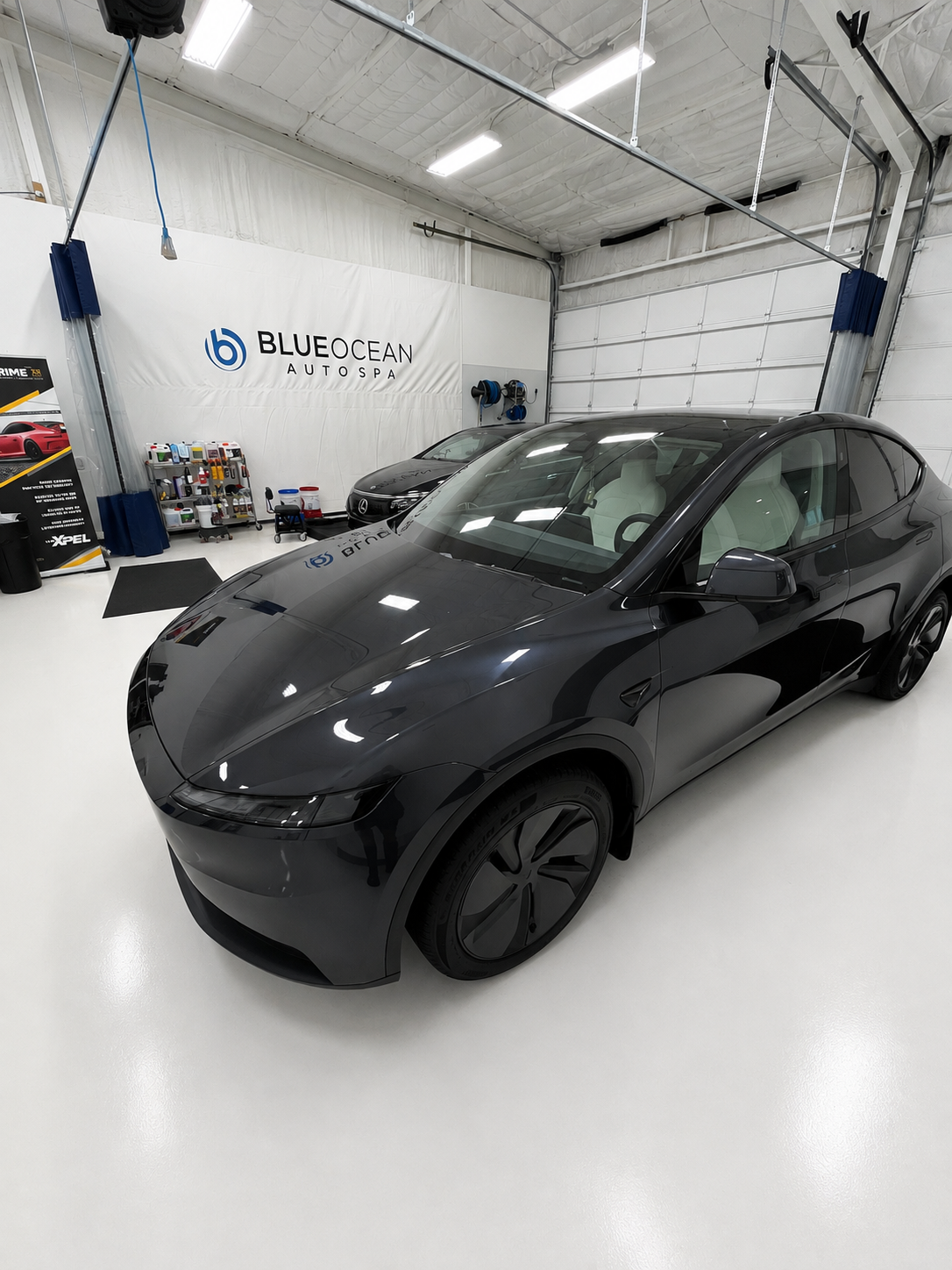
That matters even more with this particular Model Y. The dark gray exterior is paired with a bright, light-colored interior, creating a sharp contrast that suits the clean design of the vehicle. From outside, the sweeping roofline and uninterrupted side glass are major parts of the Model Y's profile. Inside, those same large glass areas are a significant part of the driving environment.
Heat-rejecting ceramic window tint allows that glass-heavy design to remain intact while making the cabin more comfortable.
For this returning client, the benefits were already familiar. Their experience with the first Tesla had made enough of an impression that they wanted the same approach for the 2026 Model Y.
Why 70% VLT on the Windshield Matters
Windshield tint can be misunderstood when it is viewed only in terms of darkness.
At 70% visible light transmission, or VLT, the windshield maintains a light appearance. That makes it well suited to an owner whose primary concern is reducing solar heat rather than creating an obviously tinted windshield.
The windshield is also one of the largest pieces of glass directly surrounding the occupants. Sunlight pouring through it can heat the dashboard, steering wheel, front seats, and the occupants themselves. On a vehicle with a minimalist cabin like the Model Y, reducing that incoming solar load can make a noticeable difference in everyday use.
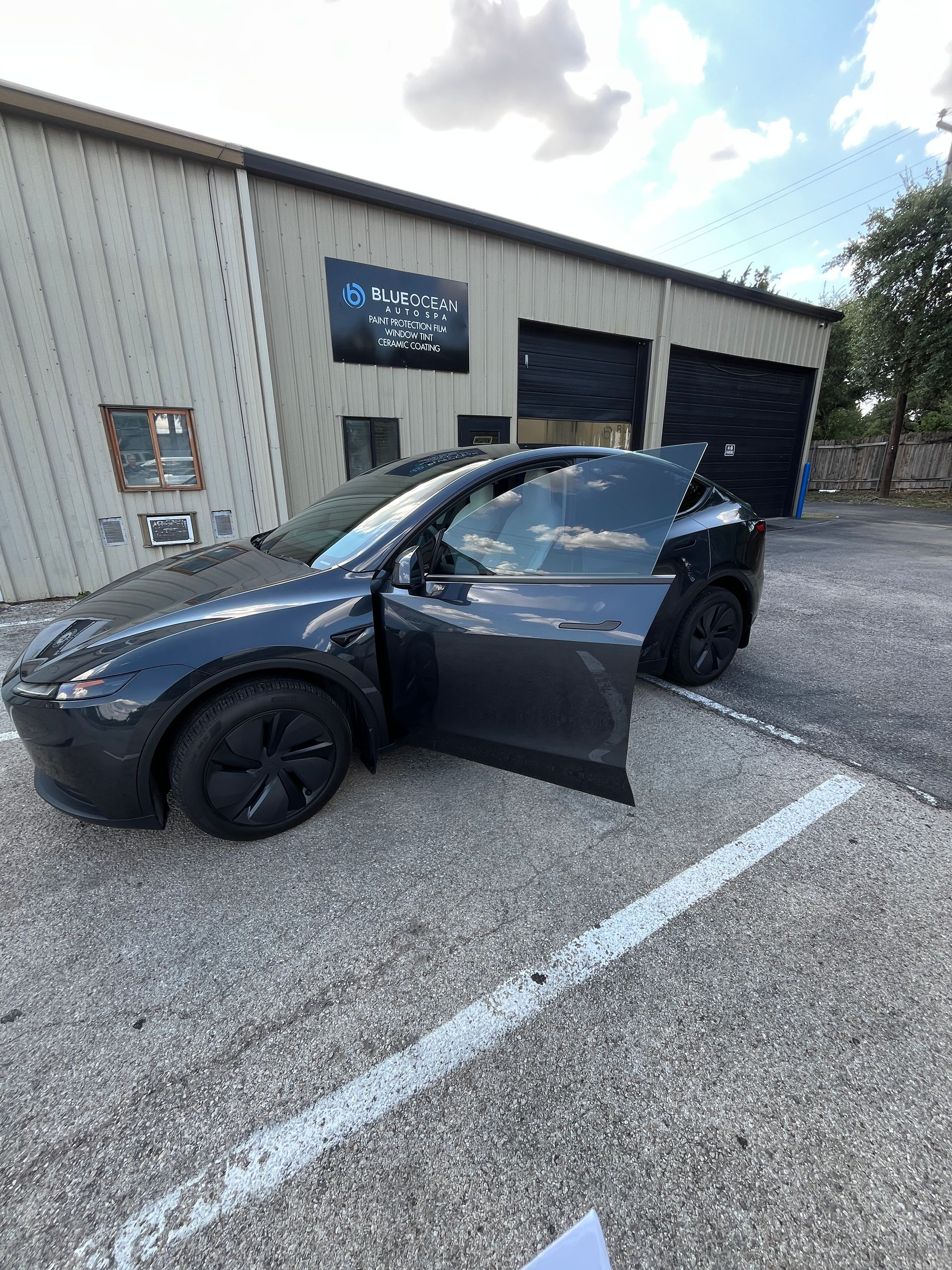
The finished result is intentionally subtle. Looking at the Model Y outside the shop, the windshield still appears clean and natural rather than excessively dark. The side glass carries a deeper appearance, complementing the dark paint, black trim, flush door handles, and dark aerodynamic wheels.
Nothing about the tint fights the original design of the car.
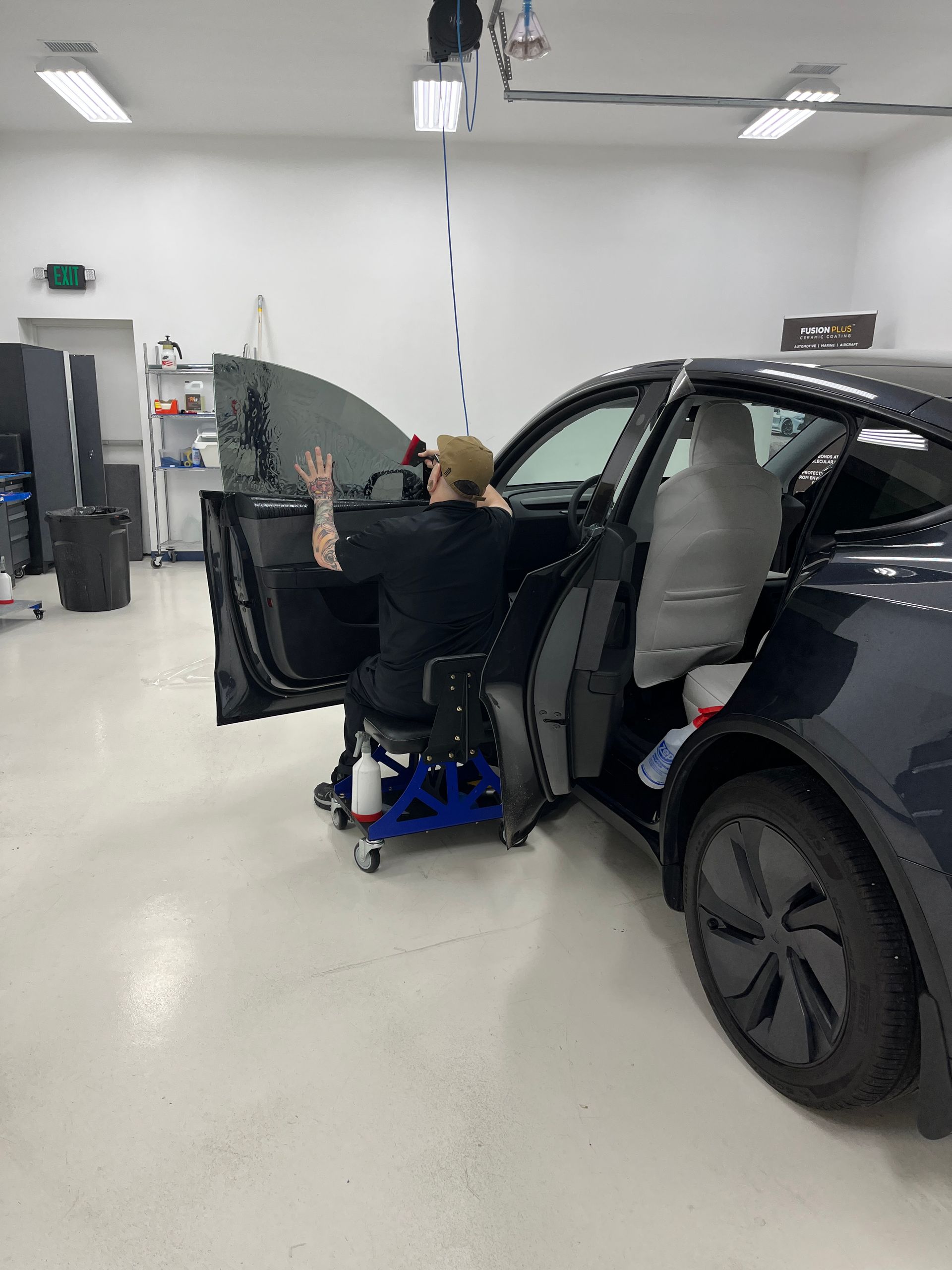
The Quality of Tint Work Is Often Found at the Edges
Applying window film properly requires considerably more control than the finished vehicle reveals.
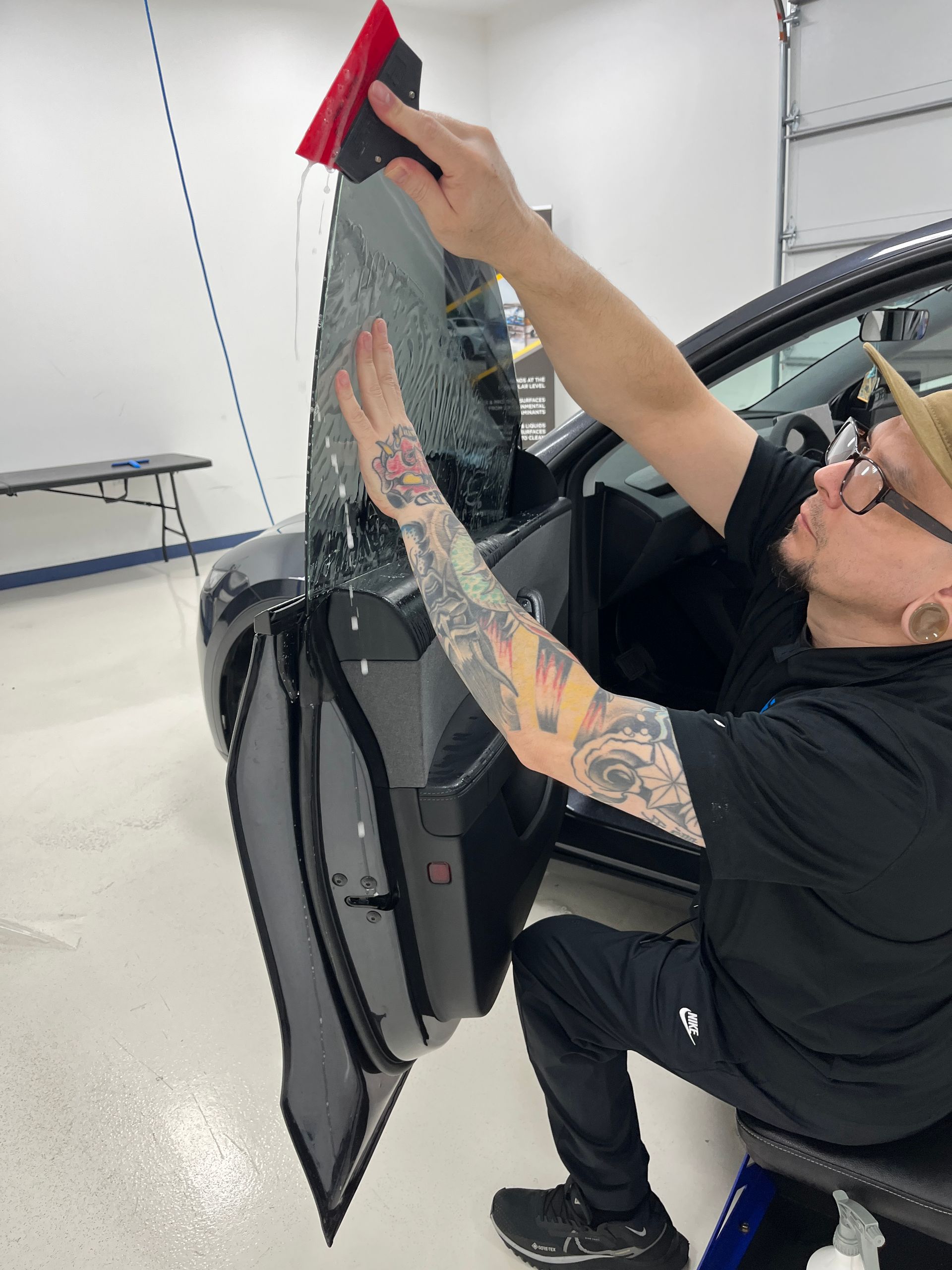
During installation, the door glass was worked with the window partially raised and lowered as needed, allowing careful access around the upper edge and lower seal. The application solution visible across the glass is part of creating the controlled working surface necessary to position the film and remove moisture during installation.
On frameless or tightly integrated automotive glass, details around the perimeter matter. The film needs to sit cleanly against the shape of the window so that once everything is finished, attention returns to the vehicle rather than the installation.
That restraint is particularly important on a Tesla. Its exterior is defined by smooth surfaces and very little visual clutter. A clean tint installation should follow the same philosophy.
Once completed, the darker side glass flows naturally into the black pillars and panoramic roof. Viewed from the rear quarter, the tint strengthens the continuous dark band of glass running along the upper half of the Model Y without changing its underlying character.
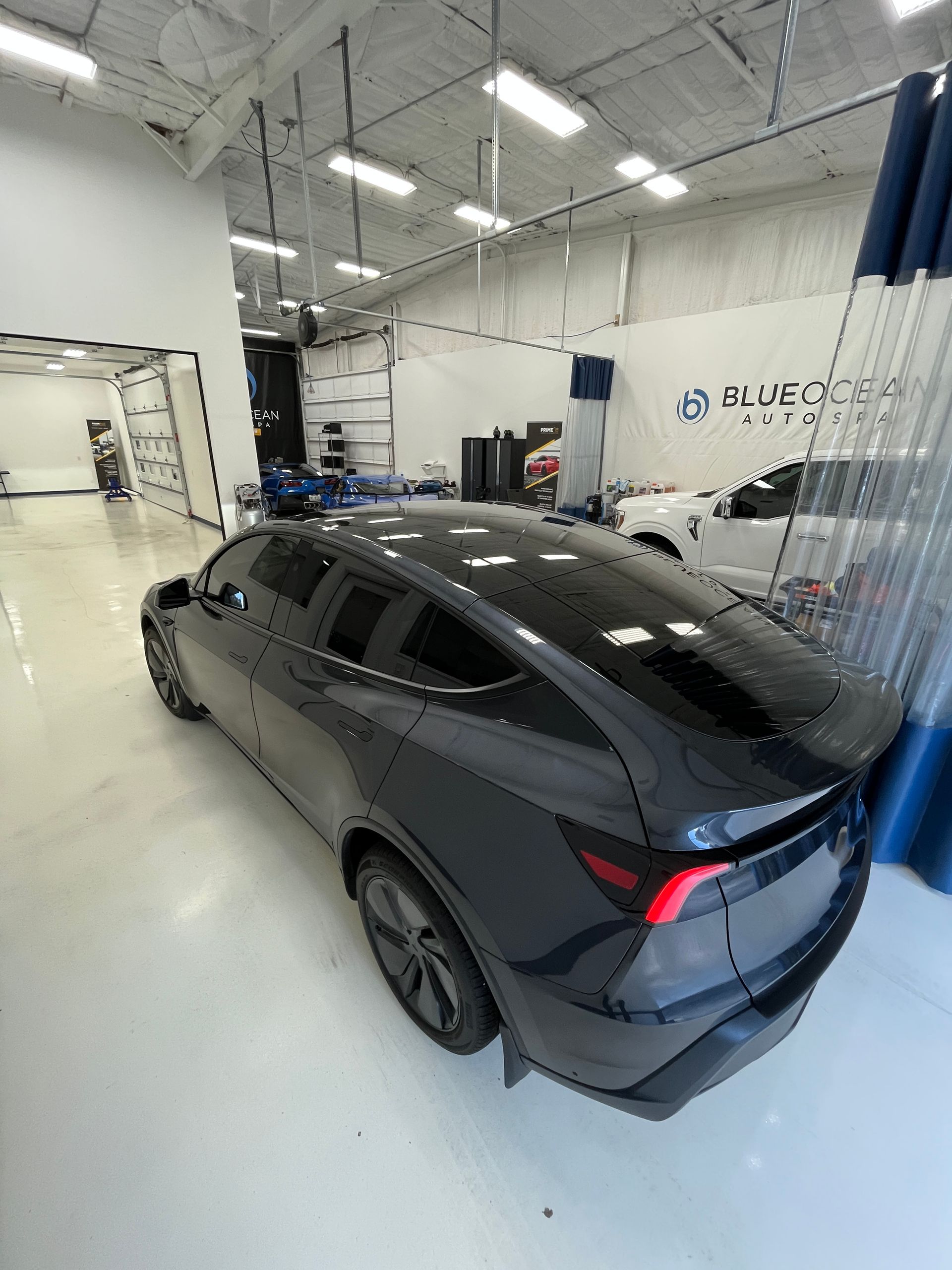
Preparation Starts Before the Film Touches the Glass
One detail stood out enough to the owner to become part of their overall impression of the experience: the Model Y was washed before the tint installation began.
That may sound separate from window tinting, but it reflects the environment in which precision work is being performed. Film installation benefits from cleanliness. Dust, loose debris, and contamination are unwelcome anywhere near exposed adhesive and freshly prepared glass.
The condition of the workspace supports the same idea. Bright lighting, clean floors, organized working areas, and room to move around the vehicle all contribute to better control during a job where small details matter.
The client noticed that care.
In the Google review they left afterward, they described owner Jon as enthusiastic about car detailing, noted that things were explained well, and said they had a great experience with the window tint service. For a returning Tesla owner who already had firsthand experience with ceramic tint, that satisfaction carries some useful context. They knew what they wanted because they had already lived with the benefits.
This is paragraph text. Click it or hit the Manage Text button to change the font, color, size, format, and more. To set up site-wide paragraph and title styles, go to Site Theme.