Can Ceramic Coating Be Applied on Top of PPF? What Cedar Park Drivers Should Know
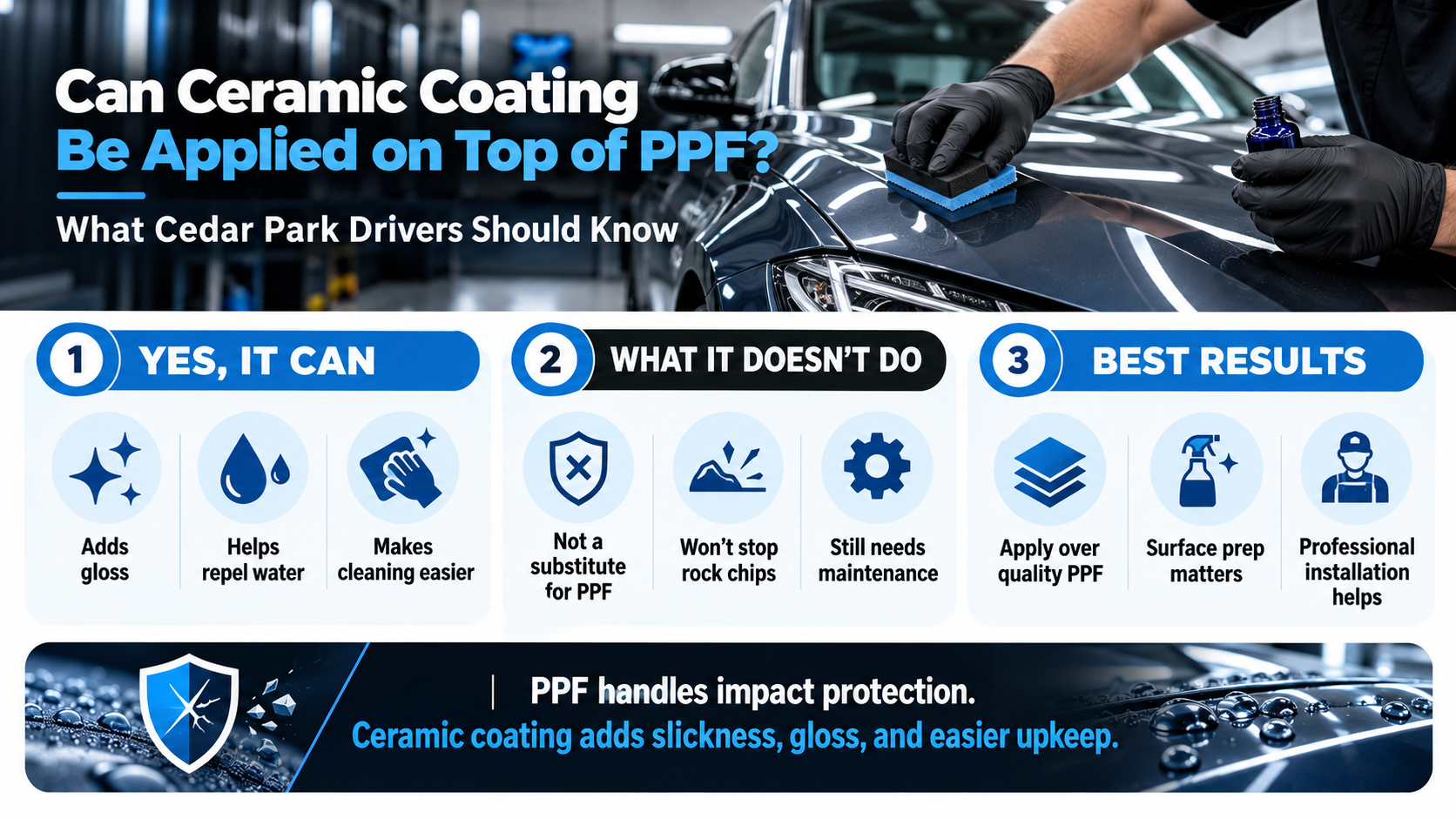
Ceramic coating can be applied over paint protection film (PPF), provided the coating is compatible with the film and the surface is properly prepared. Combining these products gives drivers two different forms of protection: PPF helps defend against rock chips and physical damage, while ceramic coating improves water repellency, makes cleaning easier, and helps maintain the film's appearance.
Why Would You Apply Ceramic Coating Over Paint Protection Film?
Applying ceramic coating over PPF adds a layer of surface protection and convenience without replacing the impact resistance of the film underneath. The combination is particularly useful for owners who want to protect their original paint while making regular vehicle maintenance less demanding.
Paint protection film already performs an important job. Its flexible urethane construction helps absorb minor impacts from gravel, road debris, and other hazards that could otherwise damage the finish. However, PPF still gets dirty, collects contaminants, and requires proper maintenance.
Ceramic coating addresses those everyday concerns by creating a hydrophobic surface that reduces how readily water and certain contaminants cling to the film.
The benefits become especially noticeable in several areas:
- Easier washing: Dirt and road grime generally release more readily from a properly maintained coated surface.
- Water repellency: Hydrophobic properties encourage water to bead and roll away, although mineral deposits can still develop.
- Reduced contaminant adhesion: Insects, bird droppings, and environmental residue may be easier to remove before they cause lasting problems.
- Appearance maintenance: A compatible coating can help maintain the film's intended gloss or matte appearance.
- Simplified routine care: Regular cleaning can become more manageable, particularly for vehicles that accumulate substantial mileage.
At Blue Ocean Auto, we see the combination as a way to make paint protection more practical over time. The PPF handles much of the physical exposure, while ceramic coating helps owners maintain the protected surfaces without making every wash unnecessarily difficult.
Does Ceramic Coating Make PPF More Protective?
Ceramic coating can improve the surface characteristics of PPF, but it does not substantially increase the film's ability to withstand rock chips or deeper scratches. Those physical protection benefits still come primarily from the paint protection film itself.
This distinction matters because ceramic coatings are sometimes misunderstood as an additional impact-resistant shield. In reality, their strengths lie in hydrophobic behavior, chemical resistance within product limits, and easier maintenance.
What PPF Continues to Handle
The film remains the primary barrier against minor impacts, abrasion, and debris thrown by surrounding traffic. Many modern PPF products also feature self-healing top layers that can reduce the appearance of light surface marks when exposed to appropriate heat.
What Ceramic Coating Adds
A compatible ceramic coating modifies the outer surface of the film, making it less receptive to certain contaminants and improving water repellency. It can also help maintain the finish's appearance, depending on the products used.
However, applying ceramic coating does not make PPF indestructible. Sharp objects, severe impacts, aggressive chemicals, and improper washing can still damage the protective system.
The strongest reason to combine both products is that they perform complementary functions. You're improving the ownership experience rather than simply doubling the level of physical protection.
Can Ceramic Coating Damage PPF if Applied Incorrectly?
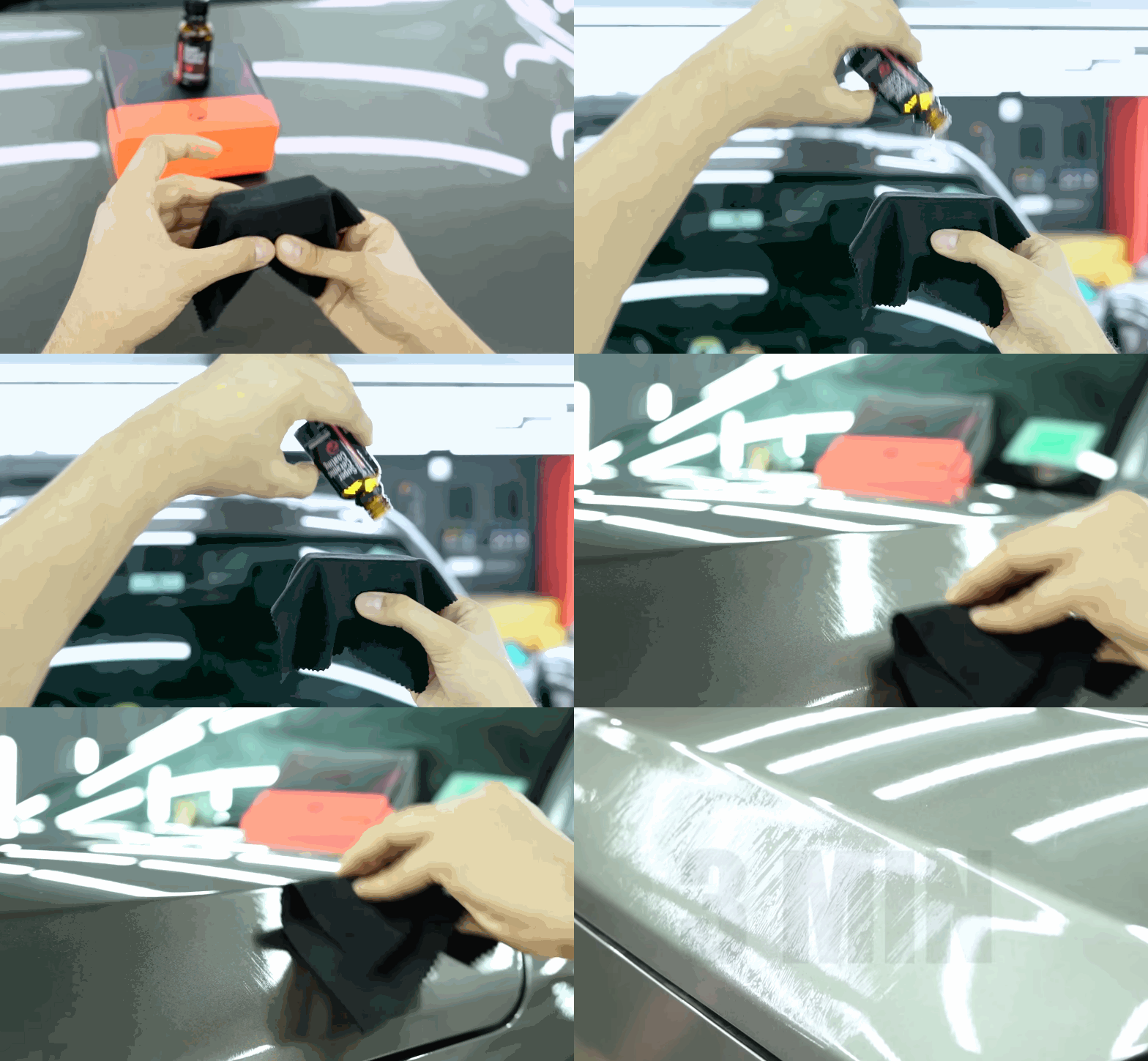
Ceramic coating can cause problems when an incompatible product is used, the film has not been properly prepared, or the application process is poorly controlled. Not every coating is suitable for every type of paint protection film, making product compatibility an essential consideration.
Some PPF products have specialized topcoats designed to provide stain resistance, self-healing properties, or a particular surface finish. Applying another product without checking compatibility may affect those characteristics or create unwanted appearance changes.
Application technique also makes a difference. Excess coating that is not leveled correctly can leave visible high spots, streaks, or uneven patches. These defects can be especially frustrating on transparent film because the underlying paint remains visible.
There are three important considerations before coating PPF:
- Confirm compatibility. The coating manufacturer should approve the product for use on the specific type of film being treated.
- Evaluate the film's condition. Existing staining, lifting edges, damaged areas, or adhesive concerns should be addressed before application.
- Follow the correct preparation and curing process. Cleaning chemicals, application methods, and curing requirements must be appropriate for both products.
A professional ceramic coating application should never assume that the same process used on exposed clear coat will automatically be suitable for every PPF surface.
For Cedar Park owners considering ceramic coating over existing film, having the material inspected first can prevent unnecessary complications.
How Does Cedar Park's Climate Affect Ceramic-Coated PPF?
Cedar Park's intense sunlight, seasonal pollen, road dust, and frequent highway travel can make ceramic-coated PPF easier to maintain, particularly on vehicles that spend considerable time outdoors. The combination addresses different forms of exposure without eliminating the need for regular washing.
Central Texas heat and strong sunlight are important considerations for exterior vehicle care. Quality paint protection film is designed for outdoor automotive use, but accumulated contamination and prolonged environmental exposure still make maintenance necessary.
Vehicles traveling along US-183, FM 1431, or commuting toward Austin can collect insects, oily road film, dust, and debris on their front-facing surfaces. PPF helps protect the paint from many minor physical impacts, while ceramic coating can make the resulting contamination easier to clean away.
Parking conditions matter as well. Vehicles left outside beneath trees may encounter pollen, bird droppings, and organic residue. A hydrophobic coating can help with cleaning, but contaminants should still be removed promptly rather than left on the surface for extended periods.
One important limitation is water spotting. Ceramic coating encourages water to bead, but those droplets can leave mineral deposits when they evaporate, particularly in hot weather. Proper drying remains an important part of maintaining the finish.
For Blue Ocean Auto, the objective is to match the protection system to how the vehicle is actually used. A daily commuter exposed to highway debris and outdoor parking may appreciate the maintenance advantages of coated PPF more than someone who drives occasionally and keeps the vehicle garaged.
The combination is most useful when its benefits align with the owner's driving habits, parking environment, and willingness to maintain the vehicle properly.
Should Ceramic Coating Be Applied Immediately After PPF Installation?
Ceramic coating can be applied after PPF installation once the film has completed the appropriate settling or curing period and the manufacturer permits coating. Applying it too soon may interfere with moisture evaporation or create unnecessary complications around recently installed edges.
The required waiting period depends on the film, installation conditions, and coating system. Some manufacturers permit coating relatively soon after installation, while others specify additional curing time.
At Blue Ocean Auto, we consider the requirements of both products before scheduling ceramic coating application. We also inspect the film for trapped moisture, edge adhesion, and other concerns that should be resolved before applying another protective product.
Coordinating both services can be convenient, but proper timing matters more than completing everything on the same day.
How Do You Maintain PPF After Applying Ceramic Coating
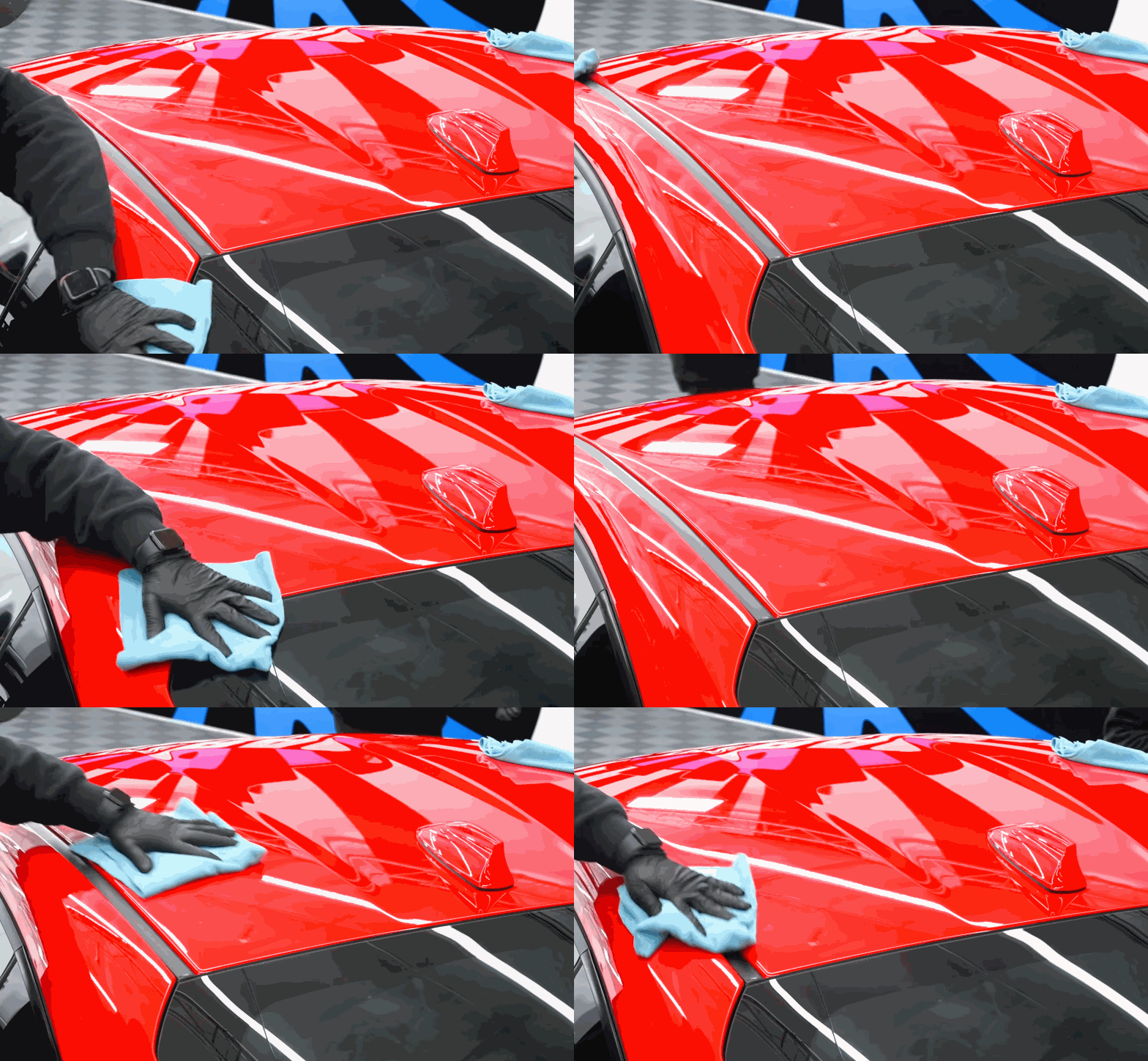
Ceramic-coated PPF requires regular washing with compatible automotive cleaning products, prompt contaminant removal, and gentle drying techniques. The coating makes maintenance easier, but it does not eliminate the possibility of water spots, staining, or surface damage.
A few habits help preserve the performance of both materials:
- Wash regularly: Remove accumulated dust, pollen, insects, and road grime before they become difficult to clean.
- Choose compatible products: Use automotive shampoos and maintenance products approved for coated PPF.
- Avoid aggressive chemicals: Harsh cleaners and abrasive compounds can compromise the coating or affect the film's surface.
- Dry the vehicle properly: Removing standing water helps reduce mineral deposits, especially during hot Cedar Park afternoons.
- Inspect film edges: Watch for lifting, contamination buildup, or physical damage that may require professional attention.
Automatic car washes with abrasive brushes can also introduce unnecessary wear. Gentle hand washing with clean microfiber towels and appropriate techniques is generally preferable.
A ceramic coating may gradually lose some of its hydrophobic performance as it ages or becomes contaminated. That does not necessarily mean the underlying paint protection film has failed. The two products have different maintenance requirements and service lives.
Is Ceramic Coating Over PPF Worth the Additional Cost?
Ceramic coating over PPF can be worth the additional investment for drivers who want easier maintenance, improved water repellency, and a finish that is simpler to keep clean. However, it is not essential for every vehicle with paint protection film.
The value depends largely on your priorities.
A vehicle with full-body PPF has a substantial amount of protected surface that may benefit from ceramic coating. For owners who regularly wash their vehicles and want to reduce the effort involved, the additional treatment can make sense.
The calculation may be different for a vehicle with limited front-end coverage. In that situation, coating the entire exterior, including compatible PPF and exposed painted panels, may provide a more consistent maintenance experience than coating only the protected areas.
It is also worth considering the quality of the existing film. Some premium PPF products already incorporate hydrophobic or stain-resistant topcoats. Adding ceramic coating may still offer benefits, but the improvement could be less noticeable than it would be on a film without those characteristics.
Ceramic coating cost should therefore be evaluated against the actual maintenance benefits rather than the assumption that every protective layer automatically makes a vehicle more resistant to damage.
Can You Apply Ceramic Coating to Both PPF and Exposed Paint?
Yes, ceramic coating can be applied to both PPF and exposed automotive paint, provided the products and preparation methods are appropriate for each surface. This allows vehicles with partial PPF coverage to receive more consistent water-repellent and maintenance benefits across their exterior.
For example, a vehicle with full-front PPF may have protected bumpers, hood, fenders, and mirrors, while the doors, roof, and rear panels remain uncovered. A compatible coating can be applied across these different surfaces, although the preparation requirements may vary.
Exposed paint might benefit from paint correction before coating, while PPF generally requires film-safe cleaning and preparation rather than conventional abrasive polishing.
The finished appearance should also be considered. Gloss PPF and exposed glossy paint can often be coated as part of the same project, while matte or satin films require products that preserve their intended finish.
The objective is to create a practical protection system without treating every exterior surface as though it has identical requirements.
Conclusion: Should Cedar Park Drivers Combine Ceramic Coating and PPF?
Combining ceramic coating and paint protection film is a practical choice for Cedar Park drivers who want physical paint protection alongside easier exterior maintenance. PPF remains responsible for absorbing many minor road impacts, while ceramic coating improves water repellency and helps reduce the effort required to remove everyday contamination.
The combination is particularly appealing for vehicles that regularly travel US-183, encounter construction-related debris, or spend extended periods parked outdoors in Central Texas conditions. Still, product compatibility, film condition, installation timing, and proper maintenance determine whether the additional coating makes sense.
At Blue Ocean Auto, we can help you evaluate your existing PPF or plan a new installation with ceramic coating in mind. Contact us today to discuss your vehicle's condition, request a personalized recommendation, or schedule professional paint protection services in Cedar Park, TX.
The best results come from choosing products that work together and understanding what each one contributes to protecting your vehicle.
Blue Ocean Auto Spa
5.0 ⭐⭐⭐⭐⭐ 226 Google reviews
Car detailing service in Cedar Park, Texas
Address:
1001 Doris Ln, Cedar Park, TX 78613, United States
Phone: +1 512-496-4296