Is Paint Protection Film Worth It in Texas? Benefits for High-Heat Environments

A black and white drawing of three lines on a white background.

Texas is known for its scorching summers, with temperatures often exceeding 100°F, relentless UV rays, and unpredictable road conditions that can wreak havoc on a car’s exterior. The intense sunlight causes oxidation and fading, while flying debris from highways and rough terrain leads to chips and scratches. Given these challenges, many drivers look for ways to protect their vehicles—but is paint protection film worth it in Texas?

Understanding Paint Protection Film (PPF) and How It Works

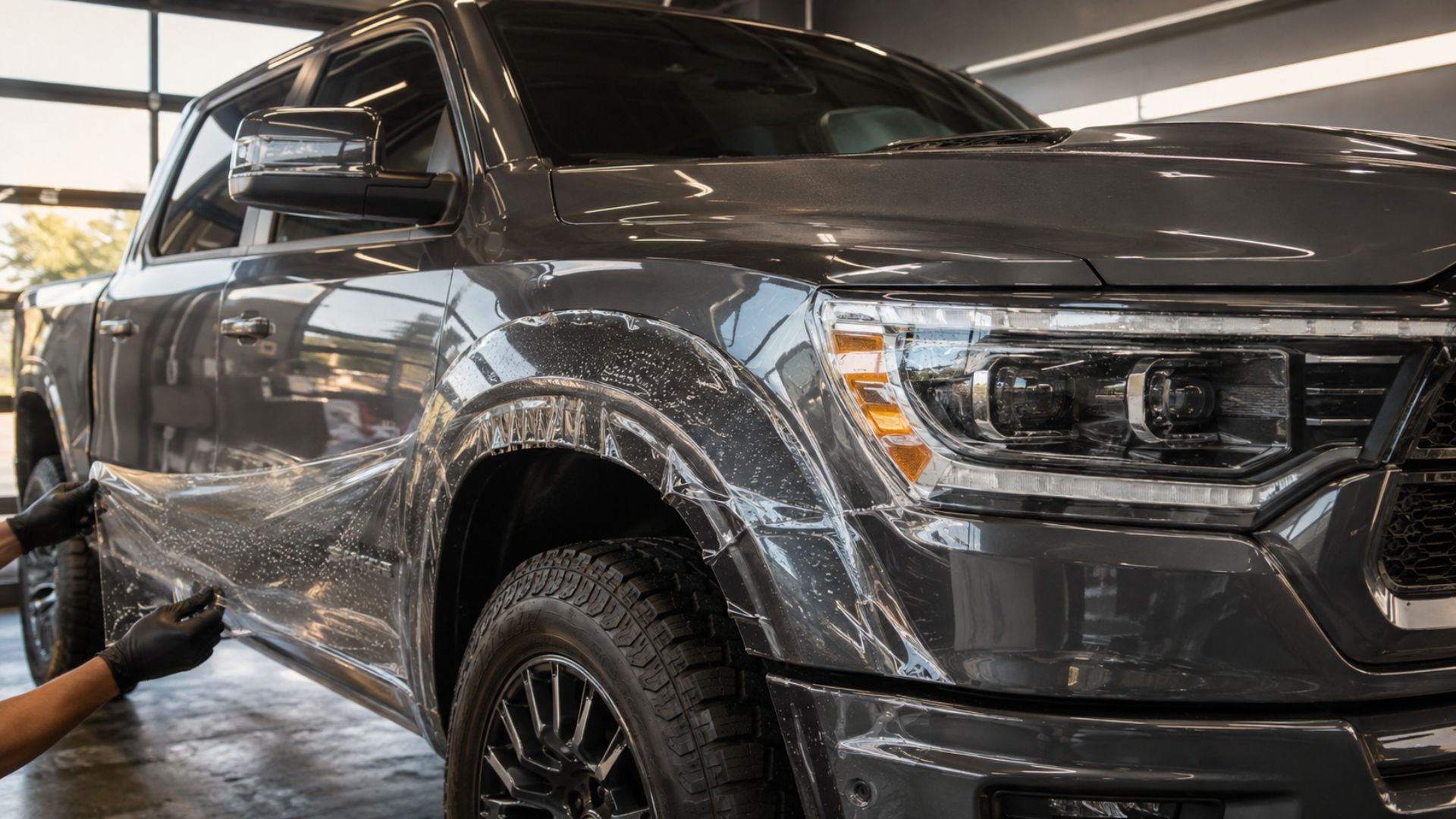
Paint protection film, or PPF, is a virtually invisible polyurethane layer applied to a vehicle’s exterior to safeguard the paint from damage. Originally developed for military applications, this advanced protective film is now a popular choice for car owners looking to maintain their vehicle’s finish in harsh conditions.

How PPF Shields Against Texas Heat & Road Hazards

A close-up of a technician trimming the paint protection film around a car emblem with precision, ensuring a seamless fit

PPF provides a multi-layered defense against the elements:

  • UV & Heat Resistance: Texas sun can accelerate paint degradation, but high-quality PPF blocks harmful UV rays, reducing fading and oxidation.
  • Impact Protection: Rock chips, gravel, and road debris are common on highways and construction zones. PPF absorbs these impacts, preventing scratches and dents.
  • Hydrophobic Properties: Water spots and dirt accumulation are minimized, making maintenance easier and extending the life of the vehicle’s paint.

One of the most impressive features of modern paint protection film is its self-healing capability—minor scratches and swirl marks disappear with heat exposure, whether from the sun or a heat gun. Unlike traditional wax or sealants, PPF is designed to withstand Texas' extreme temperatures.

Why Texas Drivers Need Paint Protection Film

Texas roads and climate present unique challenges for vehicle owners. Between the intense heat, constant highway debris, and unpredictable weather, a car’s paint job is constantly at risk. Investing in paint protection film ensures long-term defense against these elements, keeping your vehicle looking its best despite Texas' harsh conditions.

Extreme Heat & UV Radiation

With Texas summers regularly exceeding 100°F, the sun is one of the biggest threats to a vehicle’s paint. Prolonged exposure to UV rays causes paint oxidation, fading, and discoloration, especially on darker-colored vehicles. In fact, studies from the Environmental Protection Agency (EPA) show that UV exposure accelerates material degradation in cars, shortening the lifespan of a vehicle’s exterior finish.


A close-up shot of a car’s hood showcasing a sleek, glossy carbon fiber wrap with intricate detailing.

How PPF Helps:

  • Acts as a UV-resistant barrier, reflecting harmful rays and preventing premature fading.
  • Reduces the risk of paint cracking or peeling due to excessive heat exposure.
  • Maintains the car’s glossy appearance longer than unprotected paint.

Texas highways are notorious for heavy truck traffic, loose gravel, and construction zones—all of which can send rocks flying at high speeds, leading to unsightly chips and deep scratches in your car’s paint. Driving on rural roads or even navigating through newly paved city streets increases the risk of paint damage from debris kicked up by other vehicles.

How PPF Protects Against Road Hazards:

  • Provides a sacrificial layer that absorbs impact, preventing scratches and chips.
  • Helps maintain a flawless paint finish even on rough roads.
  • Covers high-impact areas like the front bumper, hood, fenders, and side mirrors.

Without paint protection film, frequent highway driving can take a toll on your car’s paint, leading to costly repairs or repaints down the line.

Frequent Dust Storms and Harsh Weather

Certain regions in Texas—especially West Texas and the Panhandle—experience dust storms, strong winds, and occasional hail that can damage a car’s paint over time. These airborne particles act like sandpaper, causing micro-abrasions that dull the finish and leave the surface vulnerable to further deterioration.

Why PPF Is Essential for Weather Protection:

  • Prevents fine dust particles from etching into the paint surface.
  • Adds an extra layer of protection against hail damage by absorbing small impacts.
  • Shields against rainwater contaminants, which can cause staining or mineral buildup.

For drivers in areas with unpredictable weather patterns, paint protection film is a smart investment to keep their vehicle looking newer for longer.

Comparing Paint Protection Film to Other Protective Solutions

There are many ways to protect your car’s paint, but not all solutions provide the same level of defense. Let’s break down how paint protection film compares to other popular options that we offer at Blue Ocean Auto Spa.

Two technicians carefully handle a large sheet of paint protection film in a workshop, preparing it for application on a car.

PPF vs. Ceramic Coating

Many car owners debate between paint protection film and ceramic coating, but the reality is that these two products serve different purposes.


Paint Protection Film (PPF):

  • Absorbs impact from rock chips, road debris, and scratches.
  • Has self-healing properties, meaning minor scratches disappear with heat.
  • Provides UV protection, helping to prevent fading and oxidation.
  • Offers moderate hydrophobic properties, making it easier to clean but not completely repellent to water and dirt.
  • Typically lasts between 5 to 10 years, depending on quality and maintenance.

Ceramic Coating:

  • Enhances gloss and shine, giving the paint a slick, polished look.
  • Offers strong hydrophobic properties, repelling water, dirt, and contaminants.
  • Provides some UV protection, helping to slow down paint fading.
  • Does not protect against rock chips, scratches, or physical damage.
  • Lasts between 2 to 5 years, requiring reapplication over time.


While ceramic coating improves appearance and repels dirt, it does not provide physical protection like PPF does. For Texas drivers who want the best of both worlds, applying PPF to high-impact areas and ceramic coating on top can offer maximum protection and shine.

PPF vs. Waxing or Traditional Sealants

Waxing and paint sealants have been used for decades, but in Texas' extreme climate, they fall short in providing long-term protection.

Why Waxing Isn’t Enough in Texas:

  • Short lifespan: Wax wears off quickly under high heat, often lasting only a few months.
  • Minimal protection: Does not prevent rock chips, scratches, or deep paint damage.
  • Requires constant reapplication: To maintain any protection, waxing must be done frequently, which adds up in cost and effort.

Why PPF Is the Better Choice:

  • Long-term durability: Once installed, PPF lasts for years without needing reapplication.
  • Superior protection: Shields against physical damage, UV exposure, and environmental hazards.
  • Low maintenance: Unlike waxing, PPF does not require frequent upkeep to stay effective.


For Texas drivers dealing with intense sun, highway debris, and unpredictable weather, paint protection film is worth it as a long-term investment that reduces maintenance, preserves paint, and keeps the car looking new.


Why PPF Helps Retain Value:


A technician wearing black gloves carefully peels off a protective film from a car window, revealing a clean and smooth finish

Paint Protection Film is an investment for so many reasons, and  it is so important if you think about selling your car in the future:

  • First impressions matter: A car with faded, chipped, or scratched paint will automatically lose value. PPF prevents these issues, keeping the vehicle looking newer for longer.
  • Buyers in Texas prefer protected cars: Given the high temperatures and road hazards, many buyers actively look for vehicles that already have PPF installed, as they know the paint is better preserved.
  • Higher resale or trade-in offers: Dealerships and private buyers are more willing to pay a premium for a car with a well-maintained exterior, knowing they won’t need to invest in repainting.

If you want your car to look its best for years and maintain a higher resale value, paint protection film is worth it—especially in Texas.

Conclusion: Protect Your Vehicle the Right Way

Texas roads and weather are brutal on your car’s paint, but paint protection film offers the best defense against UV damage, rock chips, and environmental hazards. Whether you drive a daily commuter, a luxury car, or an off-road truck, PPF helps you preserve your investment, reduce maintenance costs, and maintain resale value.


Don’t wait until your paint starts showing signs of wear—protect it before heat and road conditions take their toll. Get a free quote from Blue Ocean Auto Spa today and keep your car looking flawless for years to come!

A technician wearing orange gloves applies paint protection film to aTesla
By Jon Barnes February 3, 2026
Tesla owners in Cedar Park compare paint protection film value, PPF installation quality, and long-term paint preservation for daily Central Texas driving.
Split image showing auto detailing work. On the left, a hand in an orange glove applies ceramic coat
By Jon Barnes February 3, 2026
Sports cars and luxury vehicles in Cedar Park face harsh Texas conditions. Compare paint protection film and ceramic coating to choose the right protection.
Gloved hand applies ceramic coating to a black car hood using a microfiber cloth, with a coating bot
By Jon Barnes January 7, 2026
Understand whether ceramic coating prevents rock chips, how it compares to PPF, and when ceramic coating application makes sense for Texas drivers.
Technician applies paint protection film (PPF) to the fender of a black vehicle
By Jon Barnes December 24, 2025
Winter gravel and road debris can quietly damage vehicle paint across Texas highways. Learn how paint protection film and proper PPF installation help reduce long-term wear.
Split image showing ceramic coating application on a black car and paint protection film
By Jon Barnes December 9, 2025
Compare Ceramic Coating and Paint Protection Film for Texas drivers. Understand protection, durability, and which option fits your driving conditions best.
Water droplets beading on a glossy black car surface after ceramic coating application
By Jon Barnes November 18, 2025
Ceramic Coating care in Cedar Park made simple with washing routines, inspection tips, and expert maintenance guidance to protect your vehicle’s finish.
A person using a yellow squeegee to apply paint protection film on a black car door
By Jon Barnes November 14, 2025
Understand price ranges, coverage options, and long term value of professional PPF installation for Cedar Park drivers at Blue Ocean Auto Spa.
By Jon Barnes November 4, 2025
Here in Cedar Park, we see just how tough the Texas environment can be on a car’s paint. Between the strong UV rays, high summer temperatures, layers of pollen in spring, and the occasional hailstorm, keeping a vehicle’s exterior in top shape is no small task. Even a short drive on TX-183 or Whitestone Boulevard can leave small rock chips or dust marks that dull the finish over time. That’s why many local drivers look for reliable ways to protect their vehicles beyond regular washing and waxing. Two of the most effective solutions are paint protection film (PPF) and ceramic coating . Both deliver outstanding results, but each one serves a different purpose. At Blue Ocean Auto Spa, our goal is to help Cedar Park drivers understand these options so they can choose the protection that best matches their lifestyle, driving habits, and budget. Understanding Paint Protection Film (PPF) Paint protection film is a transparent, flexible urethane layer applied directly over the painted surfaces of a vehicle. It acts as a physical barrier against rock chips, road debris, bug splatter, and even light scratches that are common on Texas highways. What makes PPF so effective is its ability to absorb impacts, keeping the original paint untouched underneath. This product is especially valuable for daily drivers who spend time on roads like TX-29 or traveling to nearby Austin, where gravel and loose debris are often unavoidable. A professional PPF installation ensures every curve, edge, and contour of the vehicle is precisely covered. At Blue Ocean Auto Spa, we take pride in using premium materials and advanced techniques that deliver long-lasting clarity and self-healing properties. When installed correctly, paint protection film can last years while maintaining the vehicle’s original shine and value.  Understanding Ceramic Coating
A technician carefully applies a transparent paint protection film to the hood of a red sports car.
By Jon Barnes October 31, 2025
Protect your new car with paint protection film, the ultimate shield against scratches, chips, and UV damage.
By Jon Barnes October 20, 2025
Discover why ceramic coating is a game-changer for car enthusiasts. Learn how it enhances gloss, adds years of protection, and simplifies maintenance — from the experts at Blue Ocean Auto Spa in Cedar Park, TX.