Ceramic Coating vs. Paint Protection Film: Which Offers Better Protection?
If you’ve driven across Texas for any amount of time, you already know how quickly the environment can wear down a vehicle’s paint. Between the Houston humidity, the intense sun that hits you in West Texas, and the mix of road debris you’ll find along I-35, I-10, or any stretch of the Hill Country, a car’s finish takes a beating year-round.
Even the Dallas–Fort Worth commute alone is enough to leave swirl marks, bug acids, and fine scratches within just a few months. And for many of us at Blue Ocean Auto Spa, long-distance driving is simply part of life here, which means our vehicles are constantly exposed to harsh conditions.
That’s why two forms of protection have become essential for Texas drivers who want to keep their vehicles looking sharp: Ceramic Coating and Paint Protection Film. They each address different types of damage, and understanding how they work is the first step to choosing the right setup for your daily driving needs.
Why these solutions matter so much in Texas:
- Persistent UV exposure fades paint faster than in many other states.
- Dust, pollen, and airborne contaminants settle on vehicles even when parked.
- Highway speeds and frequent construction zones increase the risk of chips and scratches.
- Weather swings across San Antonio or Austin can affect paint clarity and durability.
From our experience driving these same roads and working on hundreds of Texas vehicles every year, we’ve seen just how much difference the right protection can make.
What Ceramic Coating Does Best for Texas Drivers
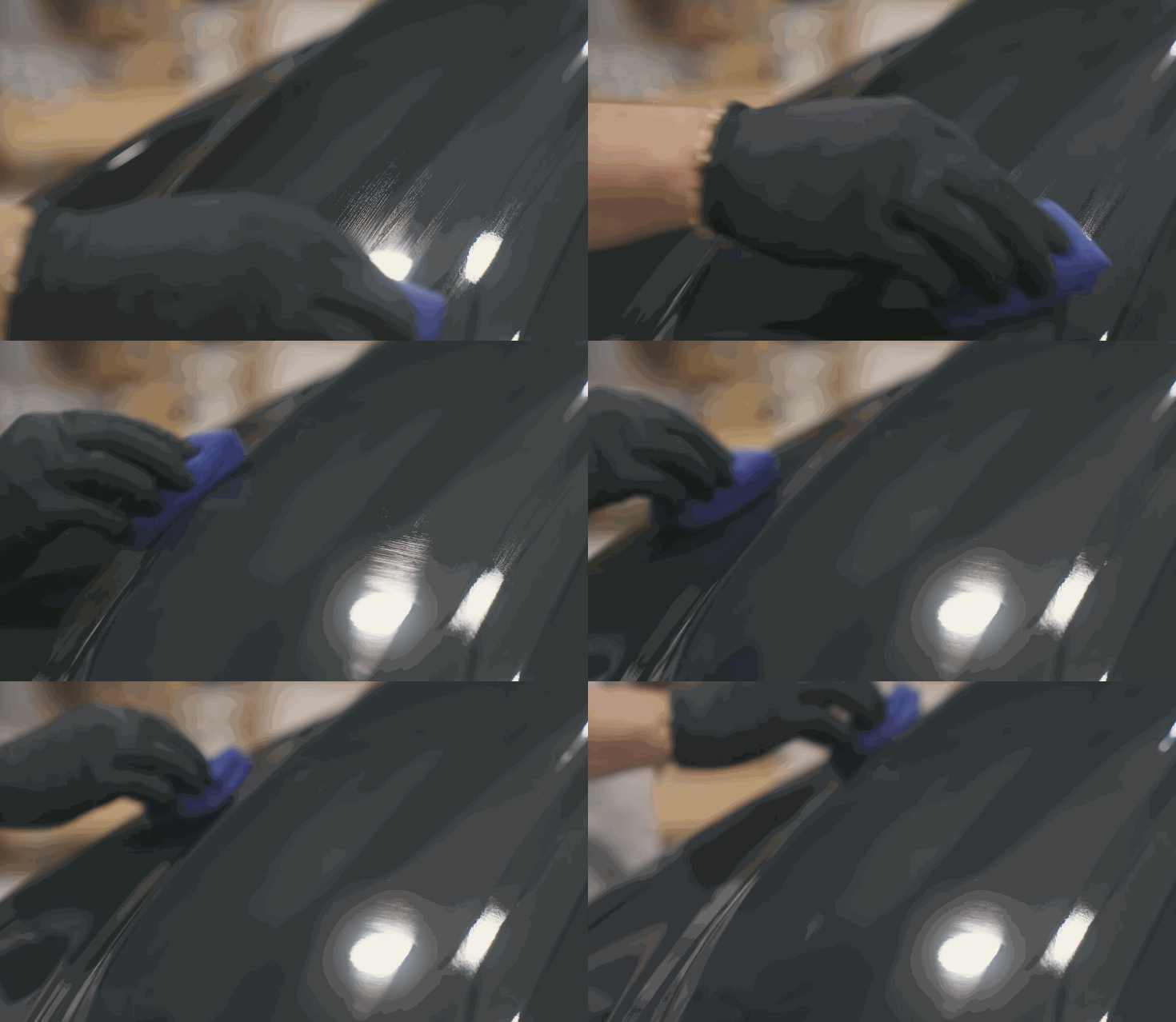
Ceramic Coating is a liquid polymer that chemically bonds to your paint, creating a protective surface that amplifies gloss, repels water, and guards against UV damage. When installed correctly, it becomes a semi-permanent layer that works with your clear coat rather than sitting loosely on top of it.
Key ceramic coating benefits for Texas conditions:
- Gloss Enhancement
– The coating fills microscopic imperfections, making the paint look richer and deeper, even on lighter colors commonly seen across Texas highways.
- UV Protection
– With sunlight intensity in places like Austin or San Antonio, this is one of the biggest advantages. The coating slows oxidation and helps prevent fading.
- Hydrophobic Coating Behavior
– Water, mud, and road grime slide off more easily, which makes washing simpler after a long drive through dusty Hill Country roads.
- Resistance to Environmental Contaminants
– Pollen, bird droppings, and bug acids (which Texas has plenty of) are less likely to etch into the paint.
Ceramic Coating shines brightest for drivers who want their vehicle to stay clean longer, look newer, and require less maintenance, even with everything Texas weather throws at it.
Where Ceramic Coating Reaches Its Limits
Even though we’re big fans of Ceramic Coating at the shop, it’s important to be honest about what it can and cannot do. The biggest misconception we hear from Texas drivers, especially truck and SUV owners, is that Ceramic Coating can stop rock chips. It can’t. The layer is thin and durable, but it isn’t designed to absorb impact from flying gravel or debris, which are almost guaranteed when driving through construction zones in Houston or along rural roads outside San Antonio.
Here are the limitations every driver should understand:
- Ceramic Coating
does not prevent rock chips, door dings, or deeper scratches.
- It
won’t replace the toughness provided by
Paint Protection Film.
- It
can’t protect against impact damage from gravel or loose asphalt, which is common on Texas highways and FM roads.
From an expert standpoint, Ceramic Coating is an excellent upgrade for shine and ease of maintenance. But for physical damage, especially here in Texas, it needs to be paired with something stronger if your goal is full protection.
What Paint Protection Film Provides That Ceramic Coating Doesn’t
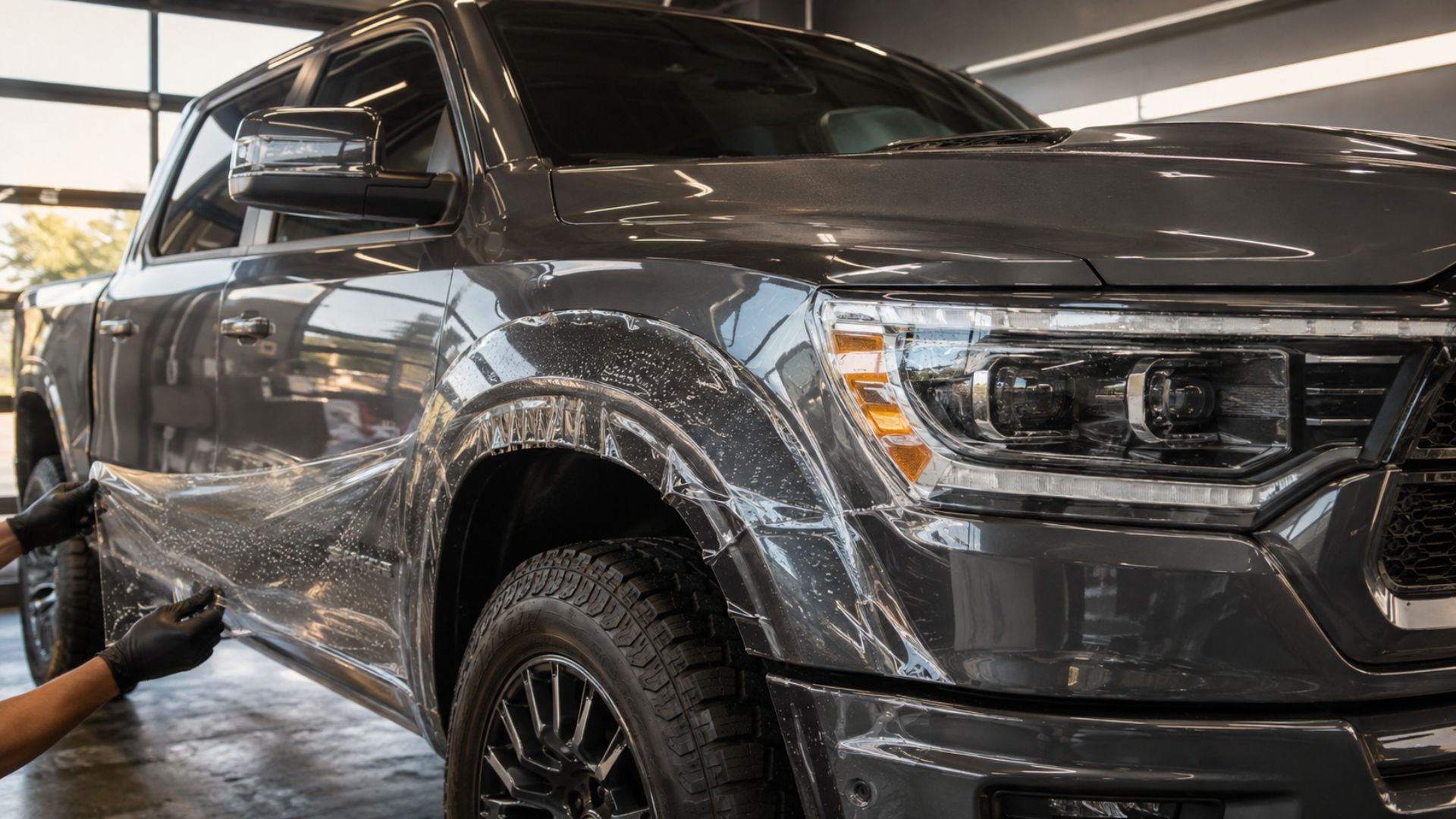
Paint Protection Film, often referred to as a clear bra, is a thick, transparent polyurethane layer designed to absorb physical impact. While Ceramic Coating protects against environmental and chemical damage, Paint Protection Film is built for real-world hazards that come at you on the road, things that hit the paint fast and hard. Here’s why PPF installation creates a different level of protection:
- Rock chip protection on highways like I-35 or I-45, where loose gravel is common.
- Defense against scratches from road debris, especially when driving through construction areas along I-10 or around Houston’s never-ending work zones.
- Self-healing properties that allow minor scratches to disappear with heat from the sun.
- Impact absorption on ranch routes or unpaved sections in Hill Country, where sticks, stones, and dirt easily get kicked up.
Where Ceramic Coating focuses on gloss, slickness, and UV resistance, Paint Protection Film steps in to take the hits, literally. For Texas drivers who spend time on rural roads or high-speed interstates, that makes a massive difference in long-term appearance and value.
Limits of Paint Protection Film
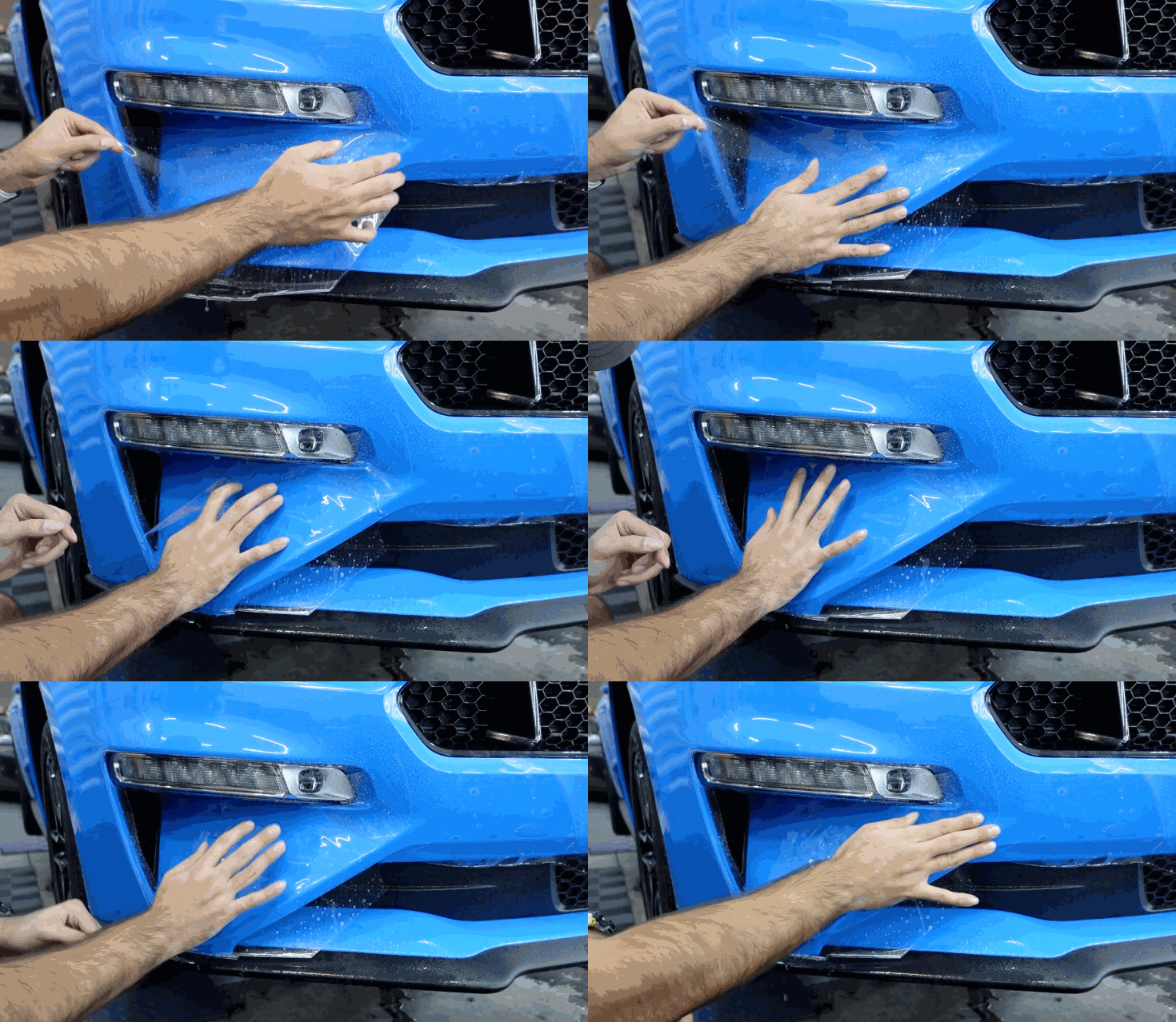
Even though Paint Protection Film is the strongest physical barrier you can add to a vehicle, it’s important to understand what it doesn't do. As installers who handle this product daily at Blue Ocean Auto Spa, we’ve seen how great PPF can be, but also where it shouldn’t be oversold. What PPF cannot replace:
- High-gloss enhancement: It won’t give the deep shine you get from a high-quality Ceramic Coating.
- Extreme slickness: Dirt and water don’t slide off PPF the same way they do with hydrophobic coatings.
- Zero-maintenance expectations: PPF still needs proper washing and aftercare to look its best.
And there’s another key point:
PPF must be installed with precision. The material is thicker and more sensitive to environment conditions. Any contamination, dust, humidity, or improper stretching can shorten its lifespan. That’s why choosing an experienced, climate-aware installer in Texas truly matters.
When applied correctly, PPF gives excellent rock chip protection, but it shouldn't be seen as a replacement for Ceramic Coating. Instead, the two serve different purposes and complement each other.
Cost Considerations for Texas Vehicle Owners
When Texas drivers compare the cost of ceramic coating and the PPF cost, it helps to understand the variables that actually influence pricing. Because every vehicle, driving pattern, and coverage plan is different, the price can shift more than many expect.
What impacts pricing in Texas:
- Vehicle size
– Trucks and SUVs, especially popular models in Texas, require more film and coating.
- Coverage options
– Full front, high-impact areas, or full body for Paint Protection Film.
- Film or coating type
– Thickness of PPF, brand differences, and the grade of Ceramic Coating used.
- Installer expertise
– Skilled technicians charge more, but their work lasts longer and performs better in the Texas climate.
- Local market conditions
– Pricing in Austin, Houston, or Dallas–Fort Worth tends to be slightly higher than in smaller Texas cities.
Even though the upfront investment can feel high, the long-term value tends to outweigh the cost, especially when you consider how brutal Texas roads can be.
Where the savings come in:
- Fewer repainting expenses caused by debris damage.
- Longer-lasting shine and protection from sun exposure.
- Lower maintenance costs thanks to hydrophobic Ceramic Coating.
- Higher resale value for vehicles protected with PPF or coatings.
When evaluating Texas paint protection pricing, we always encourage drivers to compare the upfront cost against the long-term financial impact. In many cases, spending a little more now saves a lot more later, especially in a state where your paint is constantly under attack.
Which Option Fits Texas Driving Habits?
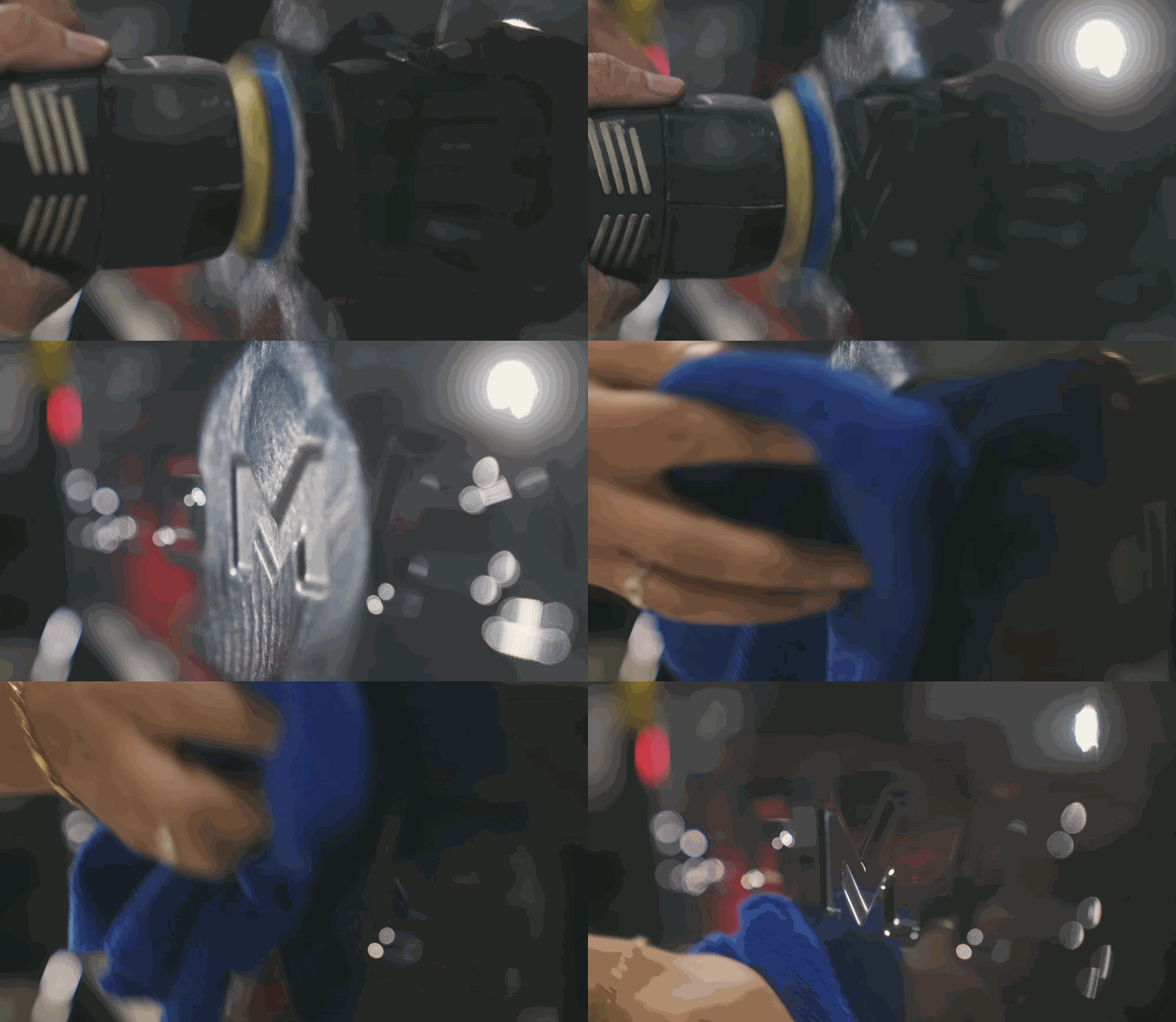
Choosing between Ceramic Coating and Paint Protection Film isn’t just about the product, it’s about how you drive in Texas. Every region in the state exposes vehicles to different challenges, and understanding those conditions makes the decision much clearer.
For example, if you’re driving through Houston, you’re dealing with humidity, constant rainfall, and traffic that traps contaminants on your paint for hours. In Austin, stop-and-go congestion and construction zones leave your front bumper vulnerable to small impacts. Meanwhile, anyone who spends time cruising the Hill Country knows how often loose gravel or small rocks get thrown up from FM roads. And for drivers out in West Texas, the UV exposure is intense enough that paint can fade quickly without proper UV defense.
City Commuters
For drivers navigating daily traffic through areas like Houston, Dallas, or San Antonio, Ceramic Coating is extremely helpful because it keeps the vehicle cleaner for longer, even with the constant buildup of dust, grime, and pollutants from congested roads. At the same time, Paint Protection Film plays a crucial role in preventing scratches caused by loose debris that gets kicked up in fast-paced city lanes. Together, these protections make the daily commute far easier on your paint.
Interstate Travelers (I-10, I-35, I-45)
If your routine includes long drives across major Texas interstates, PPF installation offers a noticeable advantage thanks to its strong rock chip resistance at high speeds. Those loose pebbles and pieces of asphalt on I-10 or I-35 can do serious damage without a barrier. Meanwhile, Ceramic Coating makes the post-trip cleanup much simpler, allowing bug splatter, tar, and road grime to rinse off with minimal effort.
Rural or Ranch-to-Market Drivers
For Texans who regularly drive FM roads or rural routes outside Austin, San Antonio, or the Hill Country, Paint Protection Film serves as a true frontline defense. These areas often hide gravel, tree limbs, and unpredictable debris that can strike the vehicle without warning. PPF absorbs much of that impact before it reaches the paint, making it ideal for trucks and SUVs used on ranch-to-market roads.
Everyday Texas Drivers
Even for those who don't fall into a specific category, both types of protection bring clear advantages. Ceramic Coating reduces the day-to-day effort it takes to maintain gloss and clarity, keeping the vehicle looking sharp despite Texas heat and dust. PPF, on the other hand, shields the high-impact areas most likely to be damaged, offering peace of mind for anyone who simply wants long-term durability for their paint.
At Blue Ocean Auto Spa, we always walk drivers through how and where they use their vehicles because the right solution depends on lifestyle, not trends. Our goal is to help you choose what makes sense for your Texas driving habits.
Why Many Texas Drivers Combine Both Solutions
A lot of our customers eventually reach the same conclusion: using both systems together delivers the strongest results. When you apply Ceramic Coating on top of Paint Protection Film, you get the best of both worlds, impact resistance and easy maintenance.
Why this combined protection works so well:
- PPF absorbs physical damage, protecting the paint from rock chips, scratches, and road debris.
- Ceramic Coating adds slickness and gloss, making the film easier to clean while providing long-term UV resistance.
- Both products extend paint life, keeping the vehicle looking newer for years.
This combination is especially popular among:
- Pickup truck owners driving through the Hill Country or West Texas.
- SUV drivers who rack up mileage between cities.
- Sports car owners wanting long-term paint preservation without sacrificing appearance.
- High-mileage commuters who need both convenience and durability.
With the coating over PPF approach, the film handles the impact, while the coating enhances appearance and reduces maintenance. It’s a setup that makes sense for Texas drivers who want long-term paint preservation without constantly worrying about their vehicle’s finish.
Choosing a Trusted Installer in Texas
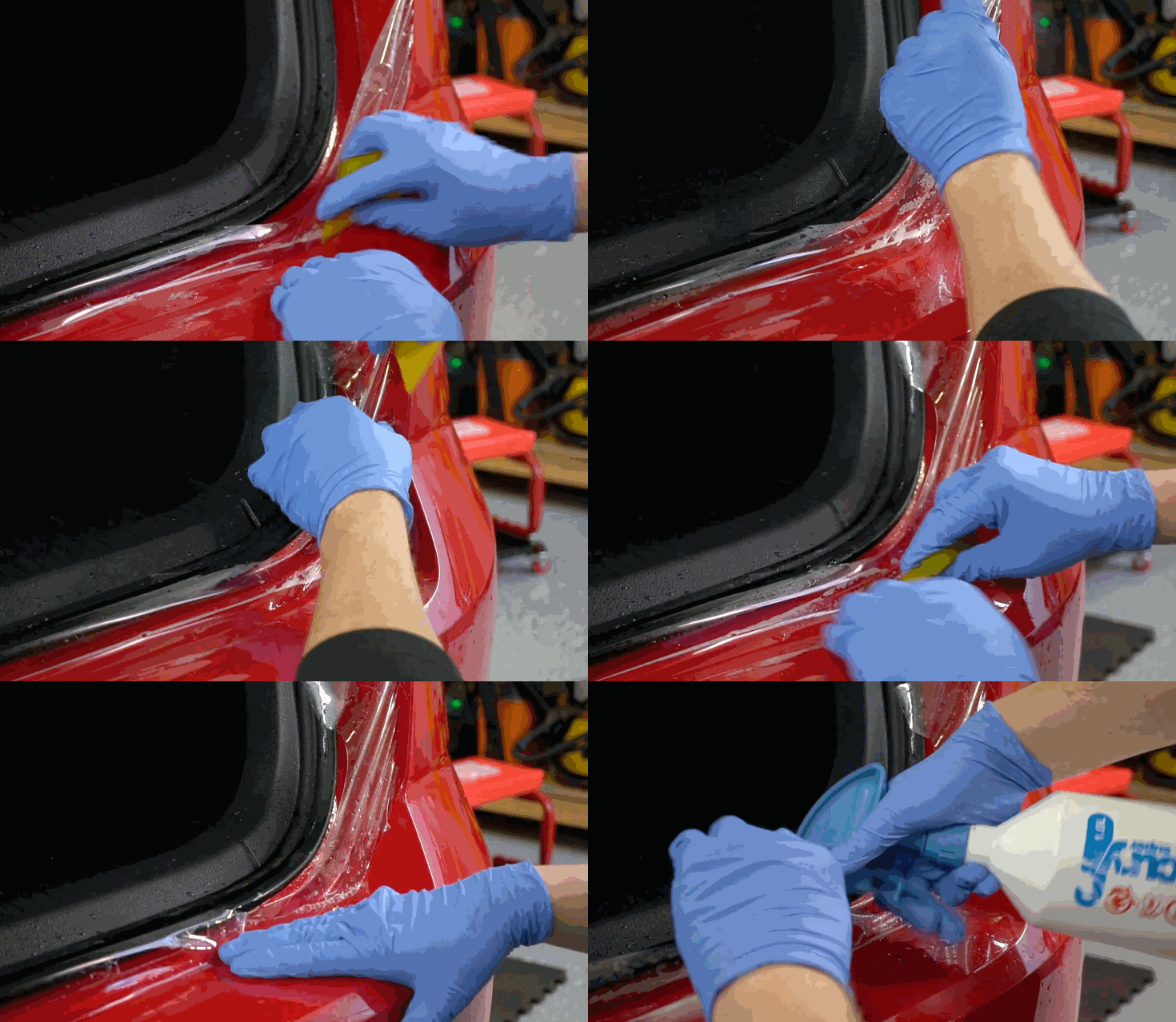
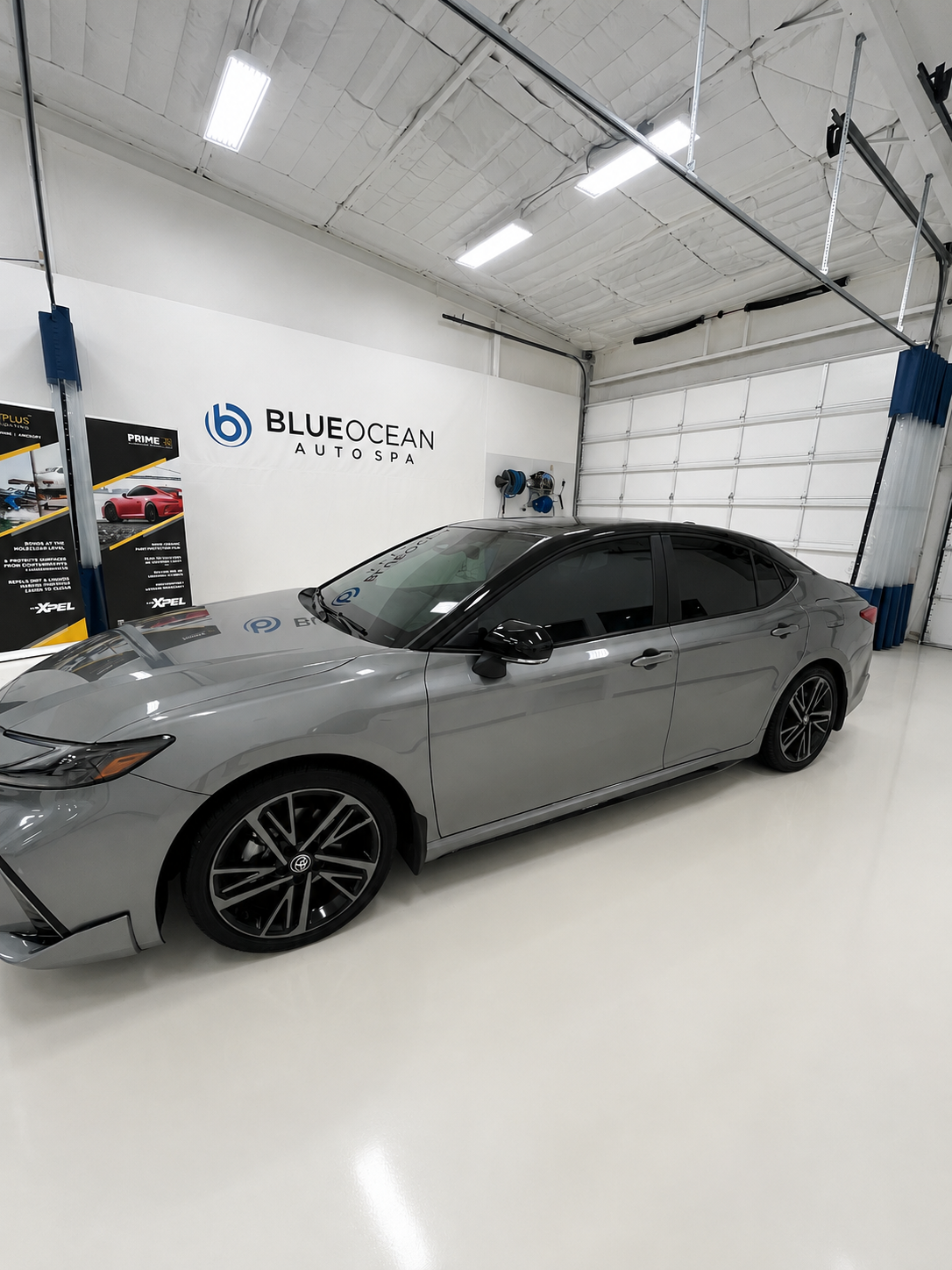
No matter which product you choose, the results depend heavily on the quality of the installation. Texas weather is unforgiving, and both Ceramic Coating and Paint Protection Film need to be applied in a controlled, professional environment to perform correctly. This is what you should look for in a Texas installer:
- Controlled workspace to avoid dust and humidity issues.
- Certified installer experience with premium films and coatings.
- High-quality products backed by clear warranties.
- Climate-aware techniques that account for extreme heat, humidity swings, and long-term durability.
- Transparent aftercare guidance so you know how to properly maintain your protection.
As a Texas auto protection expert, our team at Blue Ocean Auto Spa handles every installation with that level of care. We understand the conditions your vehicle faces because we deal with the same roads, the same heat, and the same unpredictable weather patterns. When you choose a shop familiar with Texas environments, you get professional installation that’s built to last, no shortcuts, no guesswork, just true protection.
Conclusion: Making the Right Choice for Texas Conditions
Choosing between Ceramic Coating and Paint Protection Film ultimately comes down to understanding what each solution does best, and how those strengths fit the realities of driving in Texas. Ceramic Coating excels at keeping your vehicle clean, glossy, and protected from UV exposure, pollen, humidity, and everyday contaminants. Paint Protection Film, on the other hand, is built to stop physical damage like rock chips, scratches, and debris impacts, especially in areas where Texas roads can be rough or unpredictable.
Because Texas offers a little bit of everything, intense sun, long interstate drives, heavy traffic, dusty Hill Country routes, and plenty of construction zones, no two drivers face the exact same challenges. That’s why the “best” protection isn’t the same for everyone. Some drivers need the impact resistance of PPF, others prefer the low-maintenance convenience of Ceramic Coating, and many choose to combine both for complete coverage.
If you’re unsure which option fits your driving habits and local conditions, we’re always here to help. At
Blue Ocean Auto Spa, our team can walk you through the differences based on real Texas experience and make sure your vehicle gets the protection it truly needs.
Feel free to reach out whenever you're ready to talk through your options.
Blue Ocean Auto Spa
5.0 ⭐⭐⭐⭐⭐ 92 Google reviews
Car detailing service in Cedar Park, Texas
Address:
1001 Doris Ln, Cedar Park, TX 78613, United States
Phone: +1 512-496-4296